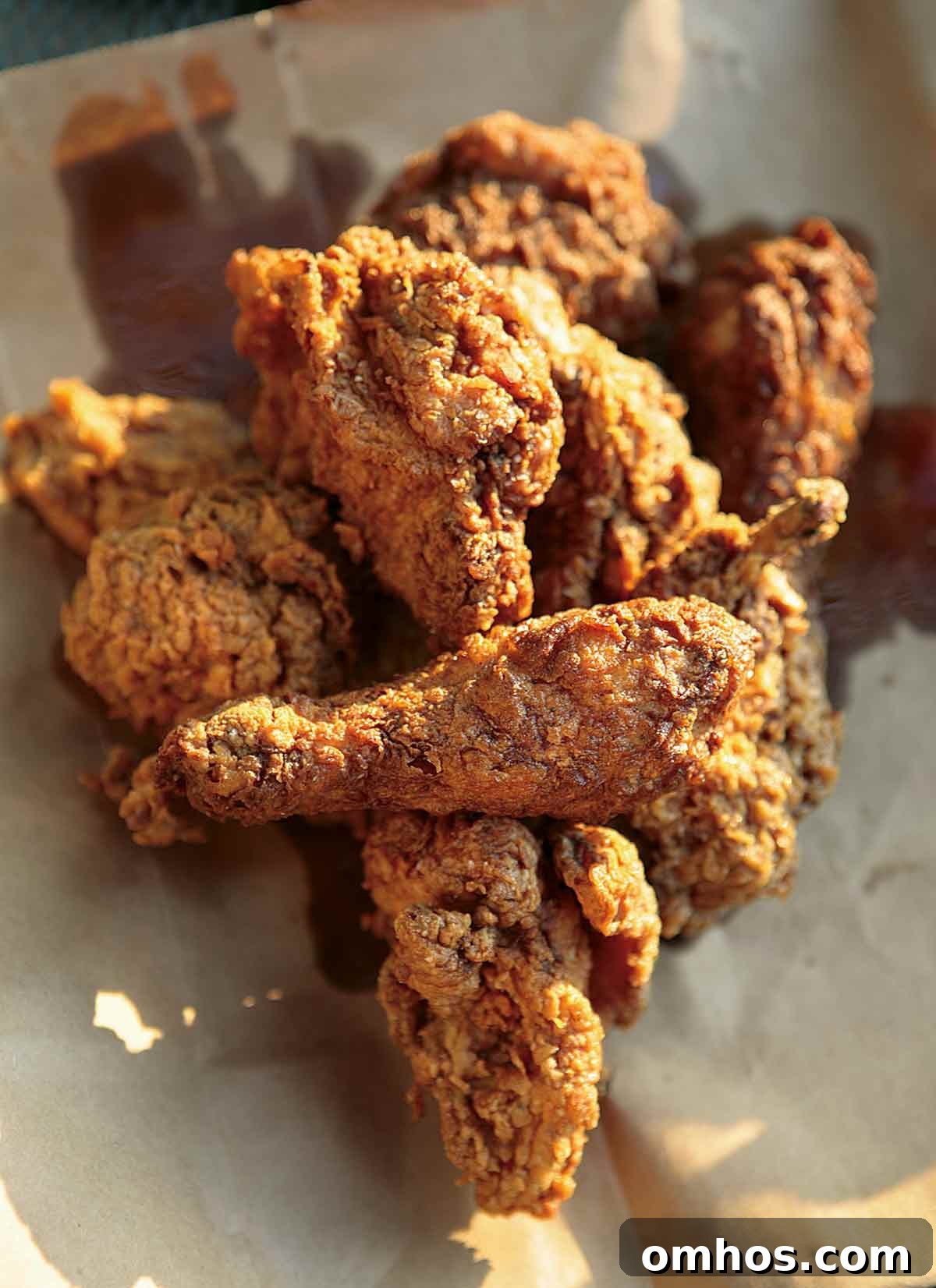
This Cajun fried chicken is soaked in buttermilk, lightly spiced, and deep-fried to deliver a crisp, golden crust and juicy, flavorful meat. With roots in Southern and Louisiana cooking, it balances heat and richness for a home-style classic that many consider among the best fried chicken recipes.
Marinating the pieces in a seasoned rub and then in buttermilk yields chicken that is tender inside with a crackling, well-adhered coating on the outside. The result is a satisfying contrast of textures and a mildly spicy Southern flavor that stands out without overwhelming the meat. —David Leite
Cajun Fried Chicken FAQs
For even cooking and more surface area for seasoning, cut a whole chicken into 10 pieces instead of the usual 8. Halve each breast crosswise so you end up with 2 wings, 2 thighs, 2 drumsticks, and 4 breast pieces. You can ask a butcher to do this or cut the chicken yourself. Smaller, uniform pieces cook more quickly and allow the coating to brown without overcooking the interior, producing juicy white meat wrapped in a crispy Cajun crust.
Buttermilk helps the flour and spice blend adhere to the chicken, creating a thicker, crispier coating. Its mild acidity also helps tenderize the outer layers of the meat, improving texture, while the milk solids contribute to browning and flavor.
Yes. Allow the chicken to rest a few minutes after frying so internal juices redistribute and the coating firms up slightly. It will still be hot but more flavorful and easier to enjoy when it has had a short rest.
Cajun Fried Chicken
David Leite
Equipment
- Deep-fry thermometer or instant-read thermometer
Ingredients
- One (3- to 4-pound) chicken, cut into 10 pieces
- 2 teaspoons salt
- 1 teaspoon freshly ground black pepper
- 1/2 teaspoon cayenne pepper
- 1/4 teaspoon ground white pepper
- 1/2 teaspoon garlic powder
- 5 dashes Louisiana-style hot sauce
- 1 cup buttermilk (low-fat or full-fat), shaken
- 3 cups lard, vegetable shortening, mild vegetable oil, or bacon drippings for frying
- 3 cups all-purpose flour for dredging
Instructions
-
Pat the chicken pieces dry. Place them in a large bowl and season with the salt, black pepper, cayenne, white pepper, garlic powder, and hot sauce. Toss so the seasoning coats the chicken evenly. Cover and refrigerate for at least 1 hour and up to 1 day to allow the flavors to penetrate.
-
When ready to fry, transfer the chicken to a clean bowl, letting any liquid drain back into the first bowl. Pour the buttermilk over the chicken pieces and turn to coat. Let the chicken sit briefly in the buttermilk while you heat the fat.
-
Heat your frying fat—lard, shortening, oil, or bacon drippings—in a large heavy skillet (cast iron works well) to 350°F (176°C) as measured with a thermometer. If you don’t have a thermometer, a pinch of flour dropped into the oil should sizzle immediately.
-
Remove the chicken from the buttermilk, letting excess drip off, and place the pieces in a clean bowl. Sprinkle the flour over the chicken and toss to coat each piece thoroughly.
-
Fry the chicken in batches so pieces don’t crowd the pan. Start with the larger pieces, shaking off excess flour before adding them to the oil. Maintain a steady temperature—adjust the heat as needed so the oil doesn’t get too hot. Cook until the coating is golden brown and the chicken is cooked through: about 8 minutes per side for larger pieces, and about 6 minutes per side for smaller pieces. Turn occasionally with tongs for even browning.
-
Transfer fried pieces to a plate lined with paper towels or a rack set over a sheet pan. Bring the oil back up to temperature before frying the next batch. Let the chicken rest a few minutes before serving so juices settle and the crust firms up.

Adapted From
Real Cajun
Nutrition
Serving: 1 serving
Calories: 1716 kcal
Carbohydrates: 73 g
Protein: 10 g
Fat: 155 g (Saturated Fat: 39 g)
Monounsaturated Fat: 64 g; Trans Fat: 20 g
Cholesterol: 2 mg; Sodium: 1195 mg
Fiber: 3 g; Sugar: 1 g
Nutrition information is automatically calculated and should be used as an approximation.
Tried this recipe?
Share your results and tag the recipe source with the handle @leitesculinaria or the hashtag #leitesculinaria.
Recipe Testers’ Reviews
Only a portion of tested recipes make it to publication; this one passed a rigorous blind-testing process conducted by home cooks and earned strong praise from testers.

Sandy Hill
Using well-seasoned cast-iron skillets brought back memories and produced delicious Cajun fried chicken. The meat was juicy and the coating crispy. I found that marinating in the dry rub, then refrigerating, helped the flavors adhere. Next time I might add more of the Cajun spices to the flour for a bolder crust.

Jo Ann Brown
I believe seasoning the meat thoroughly is the key to great fried chicken. This recipe seasons the chicken from the inside out and produced golden, perfectly juicy pieces. I fried at a slightly lower temperature for a gentler bubble and recommend bringing the oil back to 350°F between batches to avoid excess oil absorption. Use a fryer or broiler chicken rather than a large roaster for best results.

Karen Depp
This produced moist, flavorful, crispy Cajun fried chicken that my table loved. I would consider adding some of the spices to the flour to intensify the seasoning in the crust, since the buttermilk step can mellow some of the heat. Overall, this is a fabulous, repeat-worthy fried chicken.

Helen Doberstein
Marinating the pieces in the rub before frying gave the chicken extra depth of flavor. I combined the rub ingredients into a paste to coat the pieces, then dipped them in buttermilk. Leftovers lost some crispness but remained very flavorful—definitely a keeper.

Bette Fraser
Yummy! If you love fried chicken, try this recipe. I used vegetable shortening and liked the result, though bacon fat or lard would also be delicious. The chicken stayed moist and the skin was satisfyingly crunchy.

Linda B.
I enjoyed this mildly spicy, lightly crispy Cajun fried chicken. Even after splitting the breasts, larger pieces took a bit longer than 8 minutes per side to cook through, so watch timing and temperature closely.