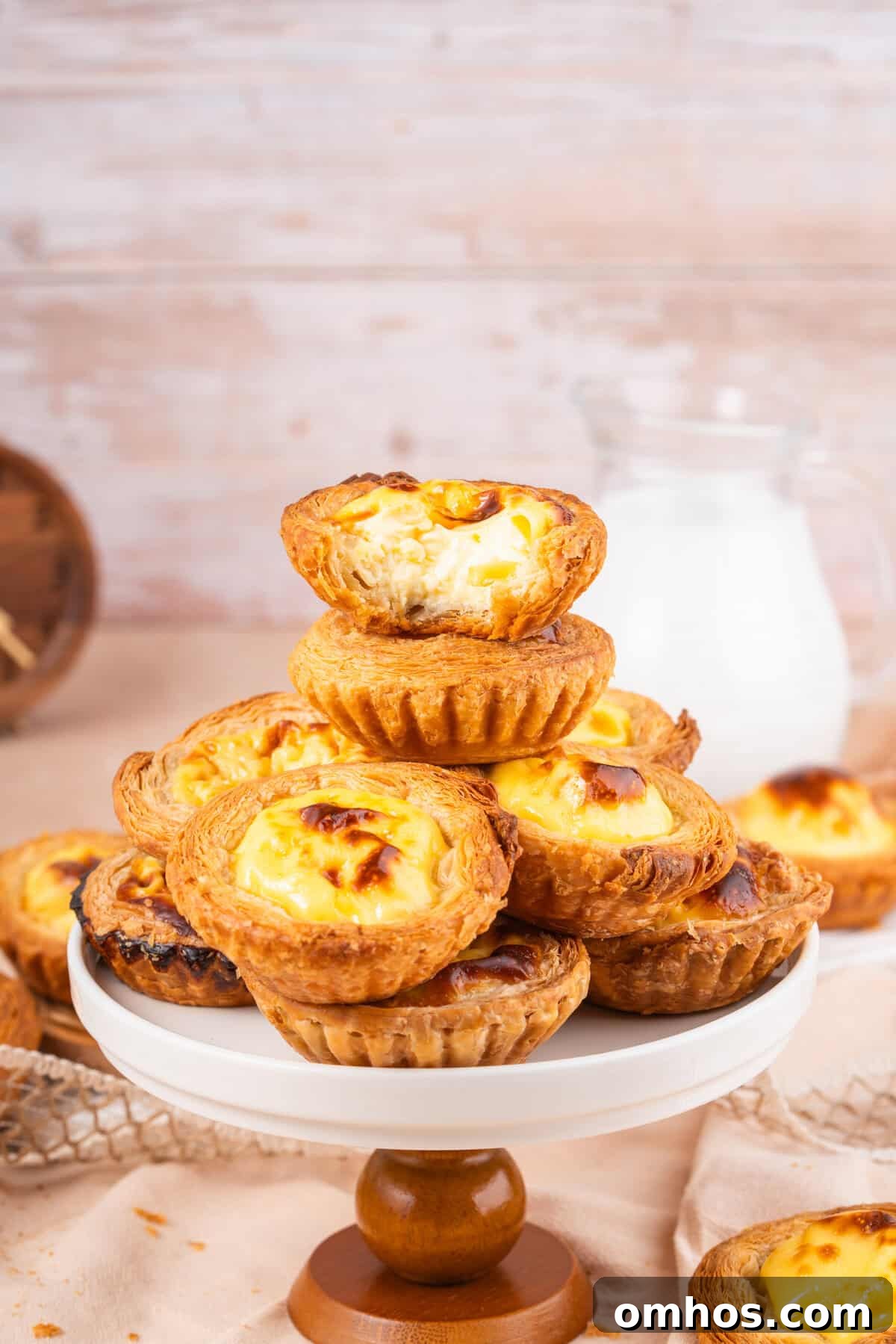
I’ve been on a “food passport” kick lately — sampling dishes that don’t usually appear in my Southern potluck rotation.
Portuguese custard tarts are a delicious discovery.
Portuguese cuisine rewards curiosity. Among its finest treats is the pastel de nata — the Portuguese custard tart — and once I tried one I was hooked.
These little tarts combine ultra-flaky puff pastry with a silky, eggy custard infused with a whisper of lemon and vanilla. The surface caramelizes in a very hot oven, giving the custard those characteristic speckles of deep golden brown and a slightly burnt sugar flavor that makes each bite irresistible.
There’s history here too: pastel de nata trace their popularity back to monasteries in the 18th century, where monks and convents made and refined many classic Iberian sweets.
This recipe is approachable because it uses store-bought puff pastry and a simple stovetop custard. No stand mixer is required, and a standard muffin tin transforms the pastry into perfectly shaped tart shells. Whether you serve them warm right from the oven or at room temperature later, they make an impressive handheld dessert for guests or a small, satisfying reward for yourself.
Imagine a shell of layered, golden pastry that shatters in your mouth, cradling a custard so smooth it nearly melts on your tongue. A touch of lemon peel brightens the richness, and a brief blast of very high heat finishes the custard with caramelized spots that add flavor and texture. They really taste as good as they look.
I’ve tested and refined this version until it reliably produces bakery-style results using pantry-friendly ingredients.
WHY THIS RECIPE WORKS:
- Store-bought pastry, bakery results: Ready-made puff pastry sheets bake up into the same flaky, layered shell you’d find in Lisbon without the time and effort of making laminated dough from scratch.
- Very high oven temperature: Baking at a high heat quickly caramelizes the custard surface, creating the signature browned speckles while keeping the filling creamy.
- Chill the shells briefly: A short stint in the freezer firms the shaped pastry so it holds its spiral shape during baking; the custard comes together in one bowl in minutes.
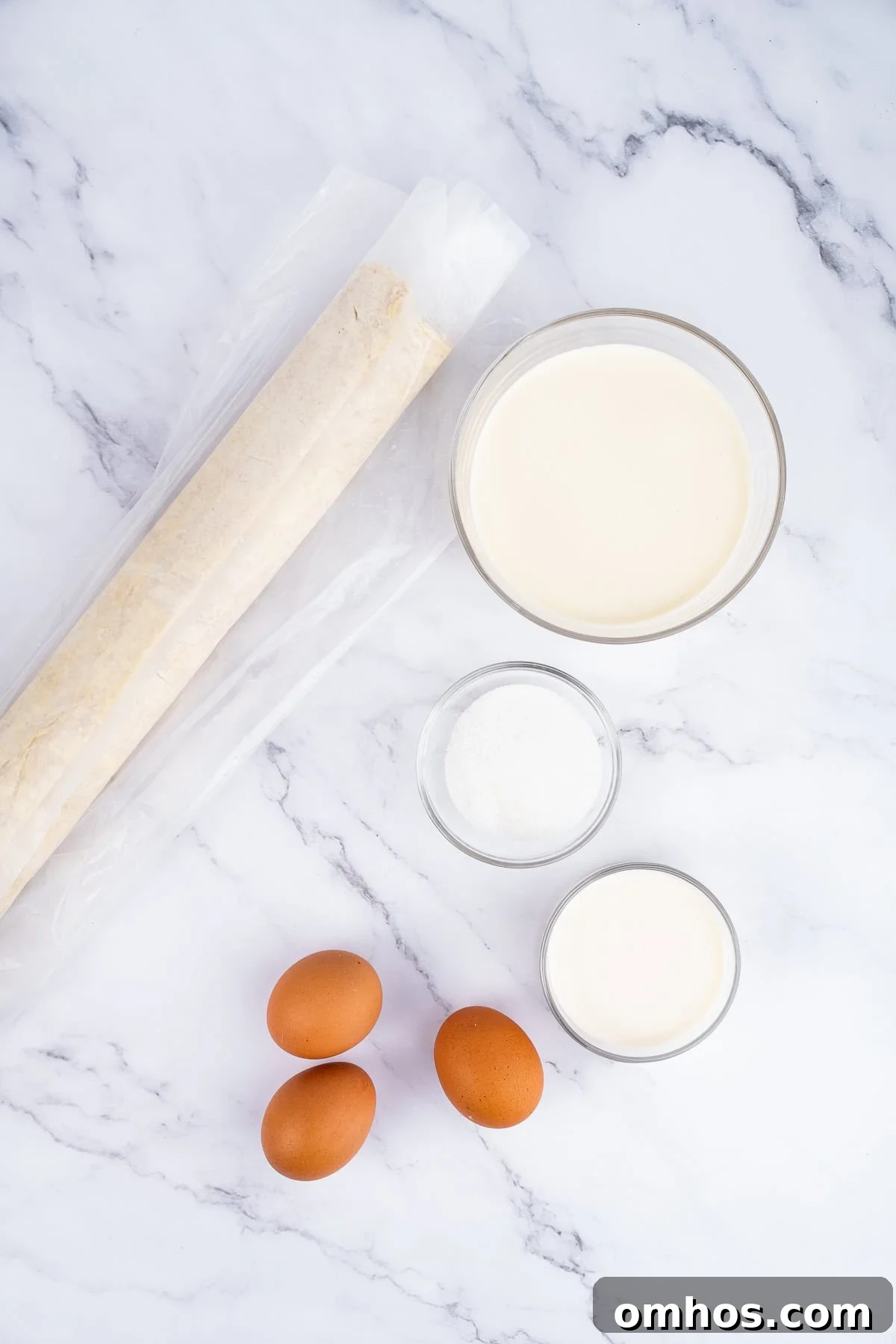
INGREDIENTS NEEDED (SCROLL TO THE BOTTOM OF THIS POST FOR THE FULL RECIPE CARD):
- Puff pastry (thawed)
- Eggs
- Heavy cream
- Whole milk
- Granulated sugar
- Salt
- Cinnamon stick or ground cinnamon (optional)
- Lemon rind or lemon peel (optional)
HOW TO MAKE Portuguese Custard Tarts:
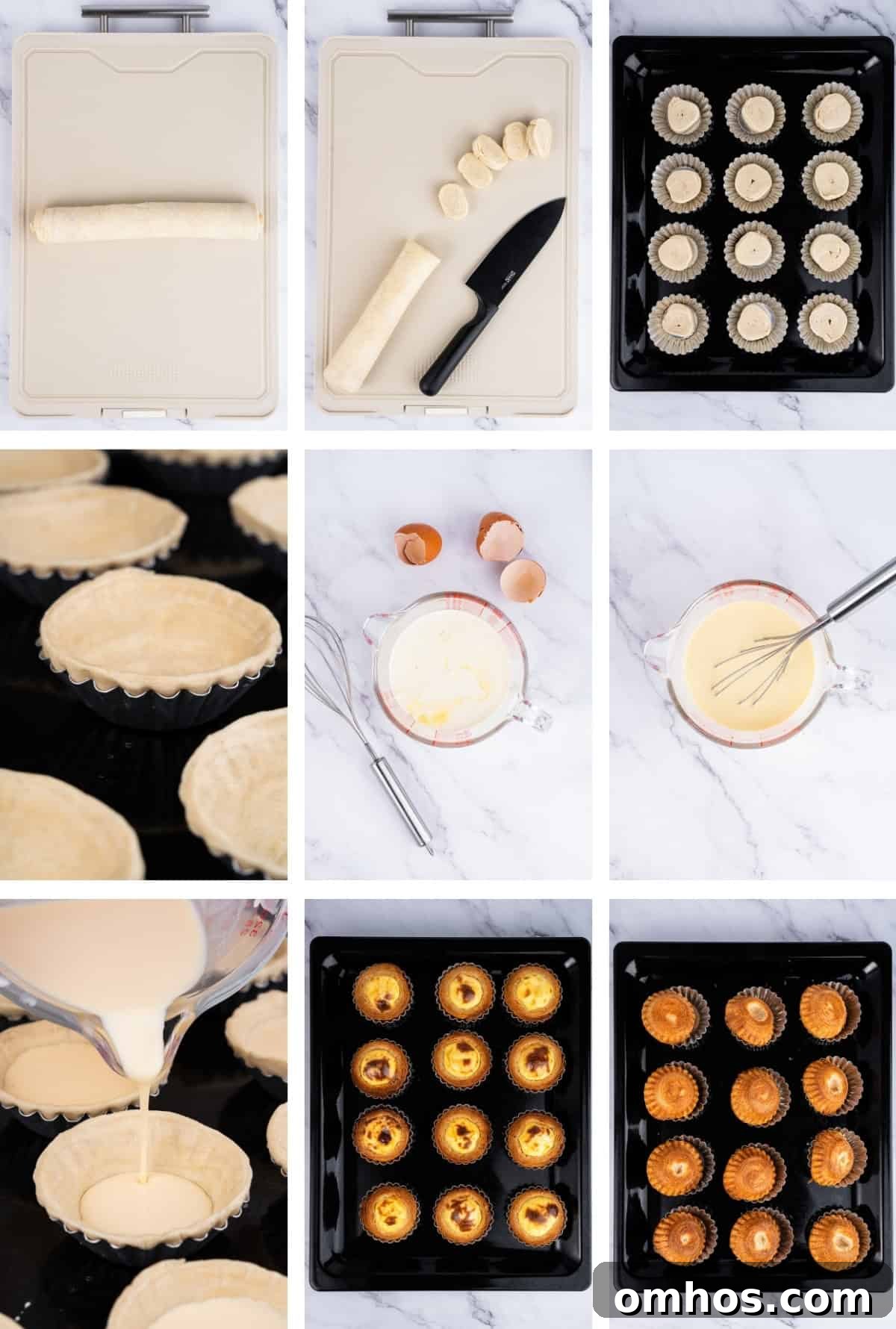
- Preheat the oven to 430°F (220°C).
- On a lightly floured surface, roll the thawed puff pastry into a tight log. Slice the log into 15 equal pieces (about 1.1 oz / 30 g each).
- Place a slice into the center of a muffin tin cavity. Use your thumb to press the center flat, then press the dough up the sides to form a cup. The dough should extend slightly above the rim (about 0.4 in / 1 cm).
- Quick-freeze the formed shells for about 10 minutes to firm them before baking.
- While the shells chill, make the custard: in a medium bowl whisk together 3 large eggs, 1 cup heavy cream, 1/2 cup whole milk, 1/4 cup granulated sugar, and 1/4 teaspoon salt. For additional flavor, add a strip of lemon peel and a cinnamon stick to the milk while you heat it gently, then remove before combining.
- Arrange the chilled tart shells on a baking tray. Fill each shell to about 80% full with the custard mixture—this leaves room for the custard to puff slightly without overflowing.
- Bake at 430°F (220°C) for about 25 minutes, or until the tops are deeply speckled and caramelized and the pastry is golden.
- Remove the tarts from the oven and invert them onto a wire rack to cool completely. Cooling upside down helps steam escape so the shell stays crisp and the custard sets without sinking.
FAQ: FREQUENTLY ASKED QUESTIONS ABOUT THIS RECIPE
WHY DO I LET THESE COOL UPSIDE DOWN?
Cooling the tarts inverted allows steam to escape, which keeps the pastry crisp and helps the custard hold its shape without collapsing. It’s a small step that improves texture.
CAN THIS BE MADE AHEAD?
Yes. Store baked and cooled tarts in a single layer at room temperature, loosely covered, for up to 48 hours. To refresh, reheat at 400°F (200°C) for about 7 minutes to restore crispness. Tarts also freeze well for up to one month—freeze on a tray, transfer to a freezer bag, thaw overnight, and re-crisp in the oven before serving.

ANY ADDITIONS?
These tarts are versatile. Try one of the simple finishing touches below to vary flavor and texture:
- Light dusting of ground cinnamon on top
- A thin drizzle of honey
- A small spoonful of fruit jam served on the side
- Shaved dark chocolate or toasted almond slivers
- A pinch of flaky sea salt for contrast
- Fresh berries served alongside
- Swap orange zest for lemon, or add a splash of rum to the custard
ANY SUBSTITUTIONS?
Substitutions can work depending on the texture you want:
- Make rough-puff pastry from plain flour and butter instead of store-bought sheets.
- Use all milk (no cream) for a lighter custard, or increase yolks for a richer filling.
- Replace granulated sugar with superfine (caster) sugar to help it dissolve more readily.
- For dairy-free versions try a mix of coconut cream and almond milk—note the texture will change.
HOW TO STORE:
ROOM TEMPERATURE: Store in a single layer, loosely covered, up to 2 days.
REFRIGERATOR: Place in an airtight container; keep up to 3 days. Reheat 7 minutes at 400°F for best texture.
FREEZER: Freeze baked tarts on a tray, then transfer to a freezer-safe bag. Keep up to 1 month. Thaw overnight and re-crisp in the oven.
DANA’S TIPS AND TRICKS:
- Roll the pastry into a tight log and slice evenly; pressing the spiral into the muffin pan gives the tarts their attractive layered sides.
- Work with just enough flour to prevent sticking—too much flour makes tough pastry.
- Keep pastry cold; if it softens, chill briefly before shaping.
- Heat milk, sugar, and cinnamon gently—avoid a rolling boil to prevent scorching.
- Fill shells to about 80% so the custard can puff without spilling over.
- Bake on the top rack so the top edge and custard caramelize more readily.
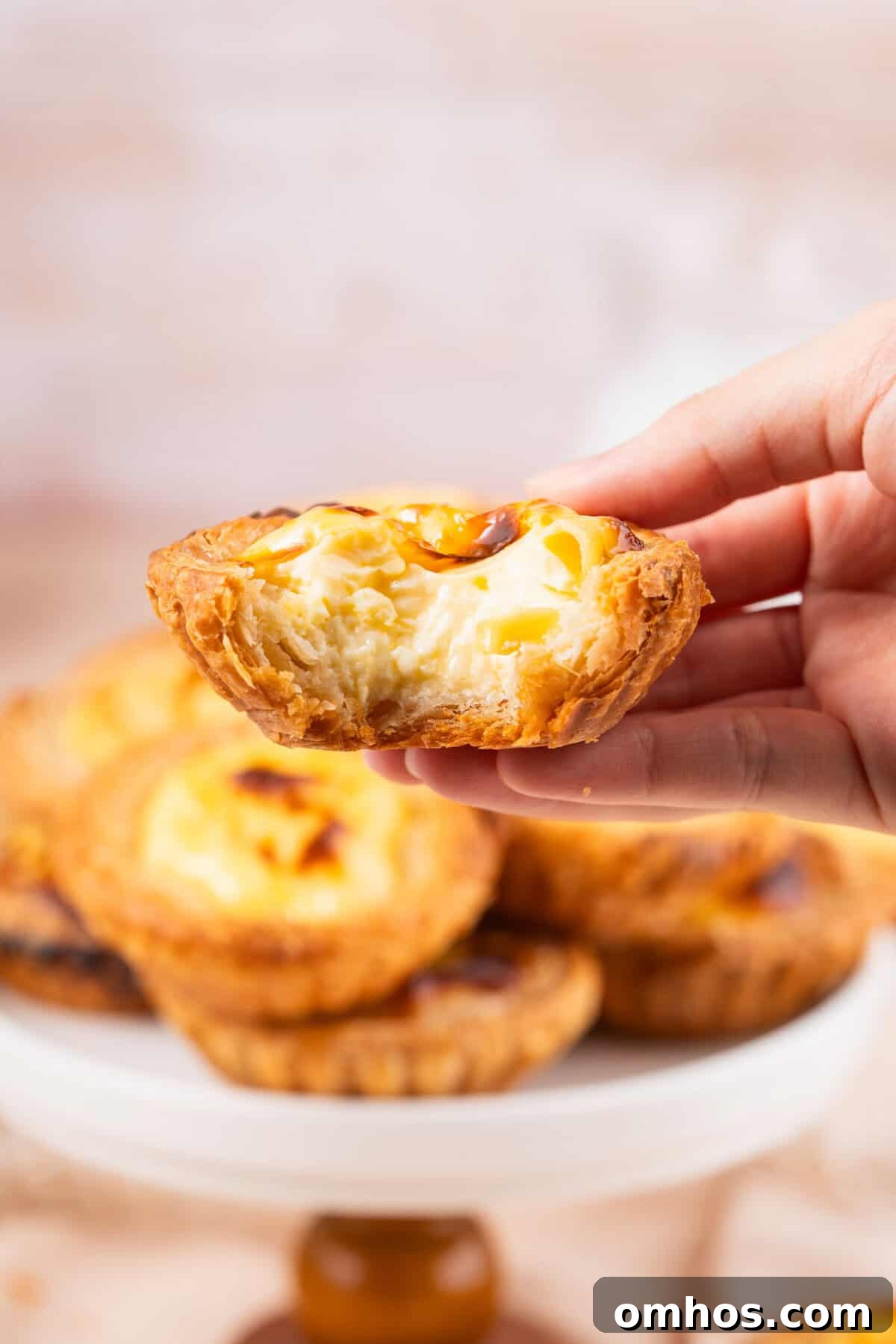
Trying new dishes is like collecting stamps in a culinary passport, and these Portuguese custard tarts are one of my favorite recent stamps. A perfect balance of crisp, buttery pastry and creamy, caramel-topped custard will transport your taste buds straight to Lisbon without leaving the kitchen.
So preheat your oven, roll that pastry, and treat yourself to a tray of pastel de nata. A friendly warning: they disappear fast.
If you like this recipe, you might also enjoy:
- How To Make Pastry Cream
- Custard Pie
- Creme Brulee Mini Trifles with Raspberry
- Portuguese Custard Tarts (Pastel de nata) — other variations
If you make these PORTUGUESE CUSTARD TARTS, please share how they turned out in the comments. For more recipe inspiration, follow the author’s recipe collection on social platforms listed on the site.
Learn more about the author, Dana DeVolk, on the ABOUT ME page
Readers often enjoy pairing these tarts with other desserts, such as Basque cheesecake, butterscotch pie, or a cream cheese danish.
Portuguese Custard Tarts (Pastel de nata)
Ingredients
- 17 oz (480 g) puff pastry, thawed
- 3 large eggs
- 1 cup heavy cream
- 1/2 cup milk
- 1/4 cup granulated sugar
- 1/4 teaspoon salt
- Optional: lemon peel and a cinnamon stick for infusing the milk
Instructions
- Preheat the oven to 430°F (220°C).
- Roll the puff pastry into a tight log and slice into 15 equal pieces.
- Press each slice into the center of a muffin tin cavity and shape into a cup, bringing dough slightly above the rim.
- Freeze the shells for about 10 minutes to firm them.
- Whisk eggs, cream, milk, sugar, and salt together. If using, heat milk with lemon peel and cinnamon stick, then strain and mix with the eggs.
- Fill each shell to 80% with the custard mixture and place the tray on a baking sheet.
- Bake for about 25 minutes until the custard is caramelized and the pastry is golden.
- Invert the tarts onto a wire rack to cool completely before serving.
Notes
- Rolling the pastry into a spiral before slicing gives the attractive layered sides.
- Keep the pastry cold; if it softens, chill briefly.
- Avoid boiling the milk when infusing—gentle heat prevents scorching.
- Bake on a high rack to promote a caramelized top.
Nutrition
Calories: 261 kcal | Carbohydrates: 19 g | Protein: 4 g | Fat: 19 g | Saturated Fat: 7 g