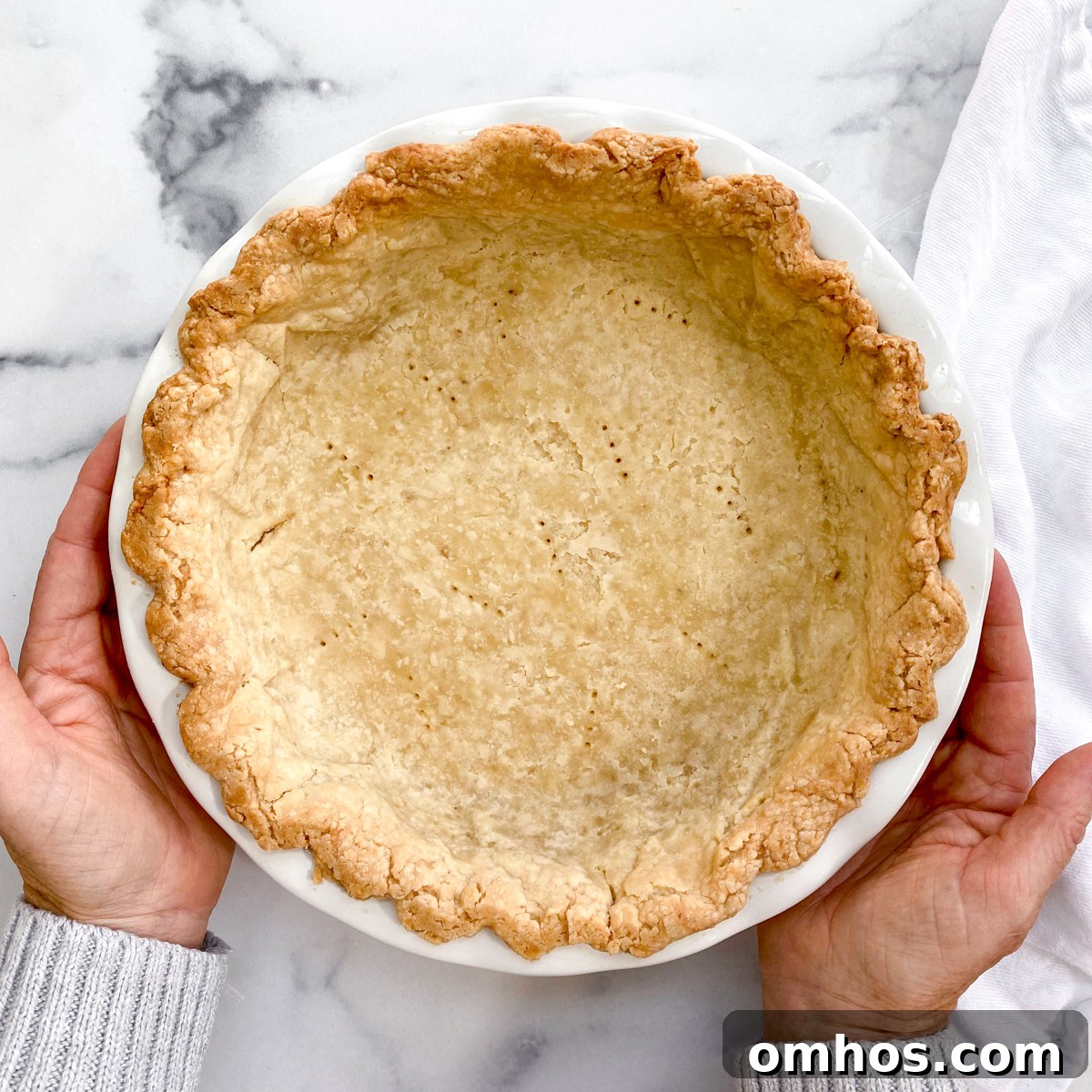
The perfect flaky pie crust that works every time. Simple to make and delicious with any filling, this recipe yields enough dough for one double-crust pie or two single crusts. It combines butter for flavor and shortening for extra flakiness, and once you try it you’ll likely come back to it whenever you bake a pie.
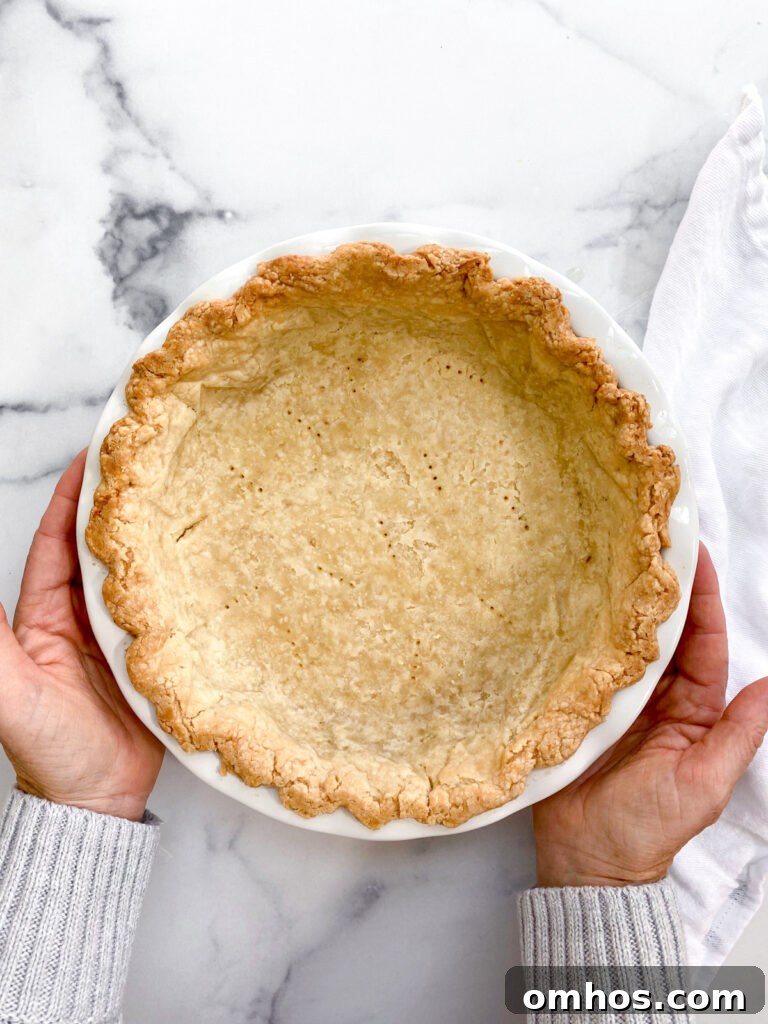
This crust is forgiving and straightforward: keep ingredients cold, don’t overwork the dough, and allow time for chilling. Below I explain the ingredients, step-by-step instructions, rolling and shaping tips, and how to blind bake a crust when your recipe calls for a pre-baked shell.
THE PERFECT FLAKY PIE CRUST
My mother always made pie crust from scratch and made it look effortless. I worried her results came from a special technique she kept to herself, but this recipe proves reliable and easy to replicate. It produces a tender, flaky crust with buttery flavor and a sturdy structure that holds up to fillings.
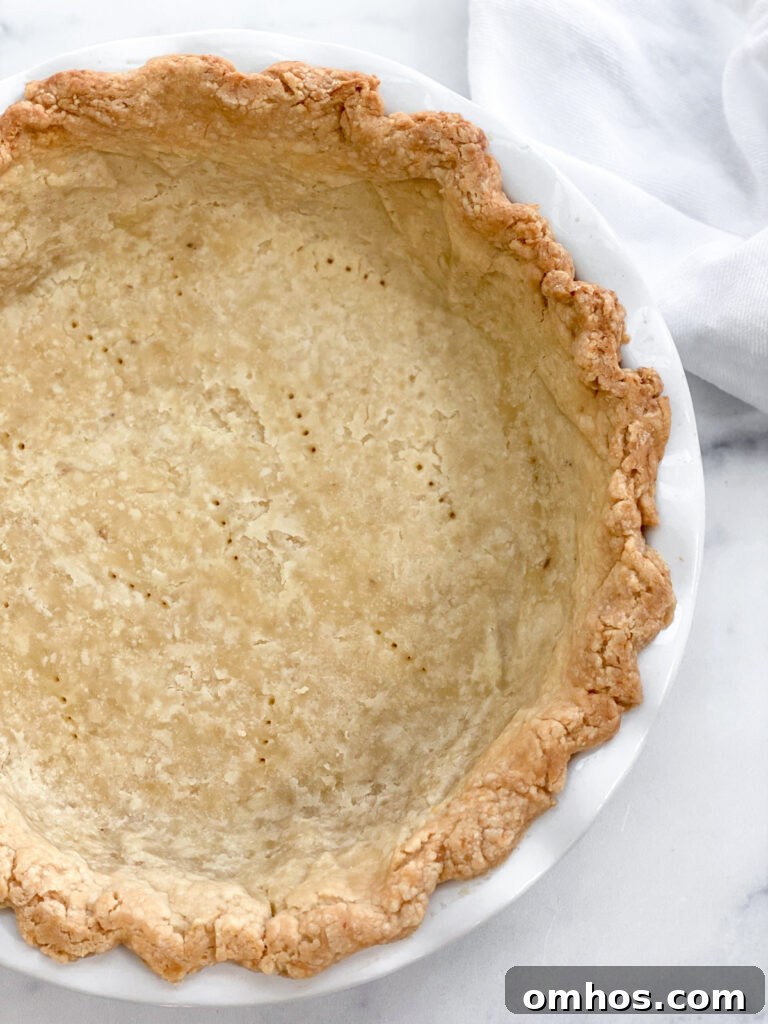
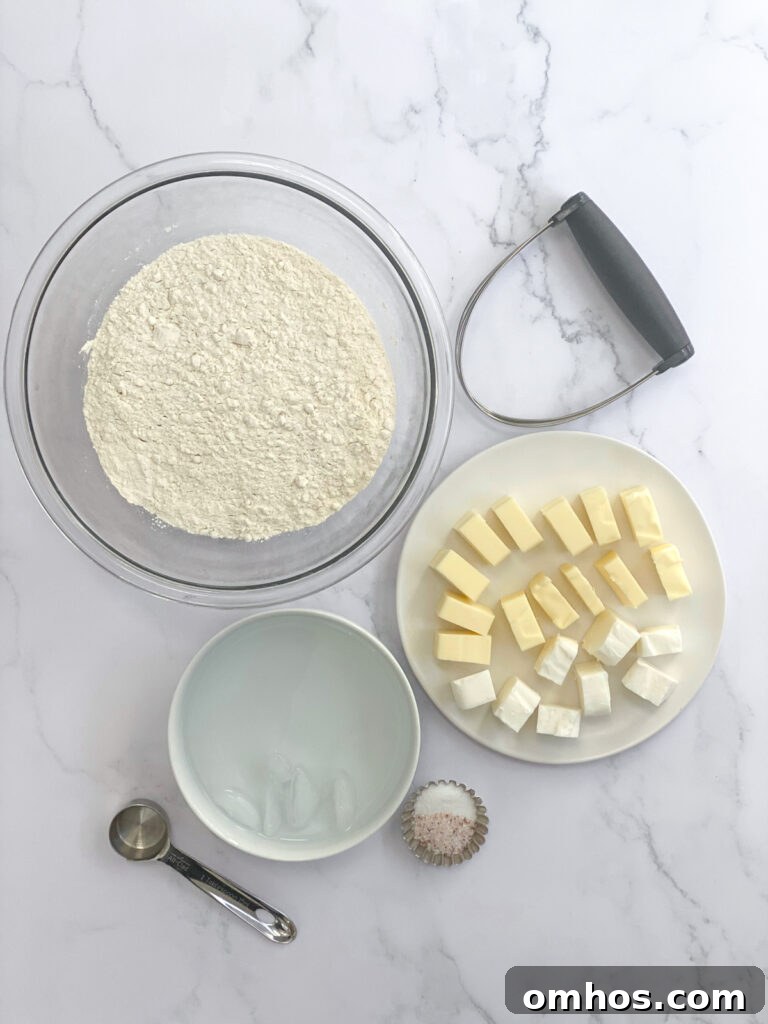
WHAT INGREDIENTS DO YOU NEED TO MAKE THIS PIE CRUST
- All-purpose flour
- Granulated sugar
- Salt
- Cold butter
- Cold shortening
- Ice water
- Apple cider vinegar
RECIPE: THE PERFECT FLAKY PIE CRUST
Yields: 2 pie crusts (or enough for a top-and-bottom double crust)
Prep time: about 20 minutes (plus chilling)
Cook time (for blind baking): about 50–60 minutes
Ingredients (measured)
- 3 cups (420 g) all-purpose flour
- 1 tablespoon granulated sugar
- 1 teaspoon salt
- ¾ cup (170 g) cold butter, cut into pieces
- ½ cup (102.5 g) cold shortening, cut into pieces
- 4–8 tablespoons ice water (start with 4)
- 1 tablespoon apple cider vinegar
STEP BY STEP INSTRUCTIONS
- In a large bowl, whisk together the flour, sugar and salt.
- Cut in the cold butter and shortening using a pastry cutter, two forks, or a food processor in short pulses. Work until the mixture resembles coarse meal with pea-sized bits of fat remaining—these pockets create flakiness when baked.
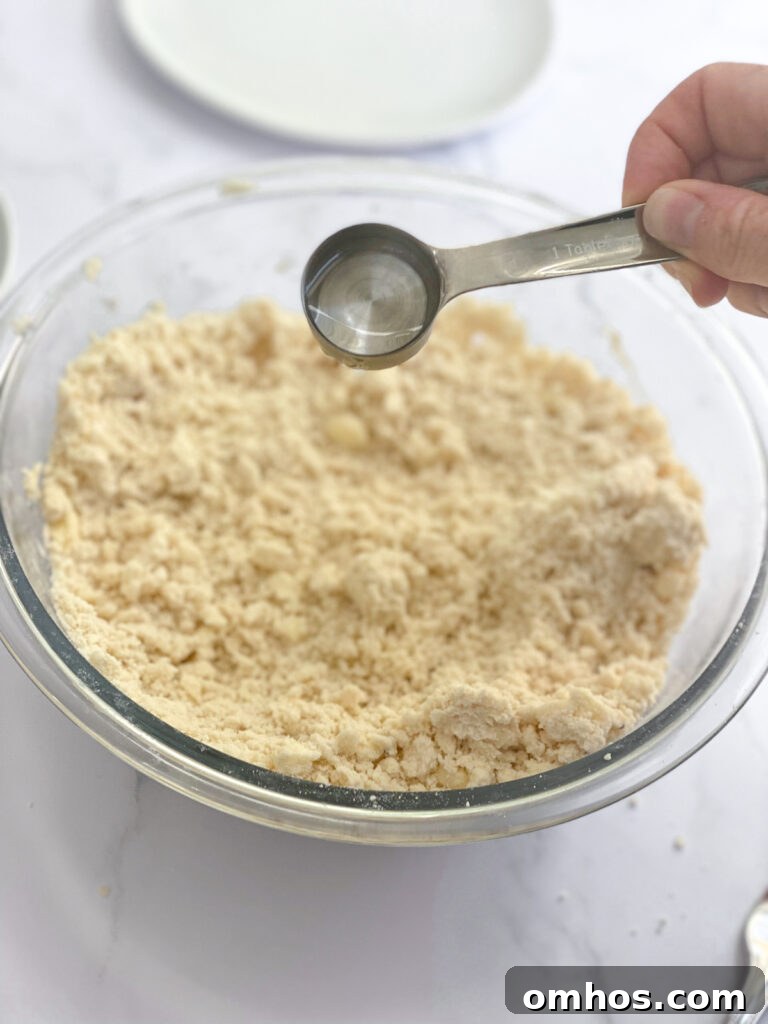
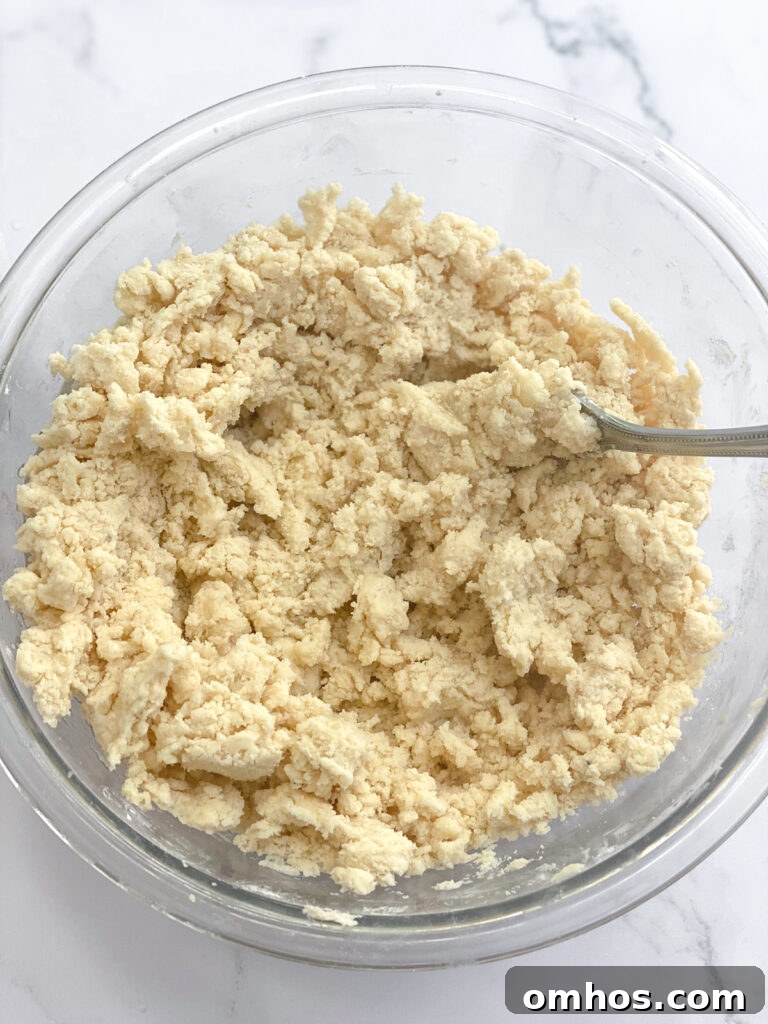
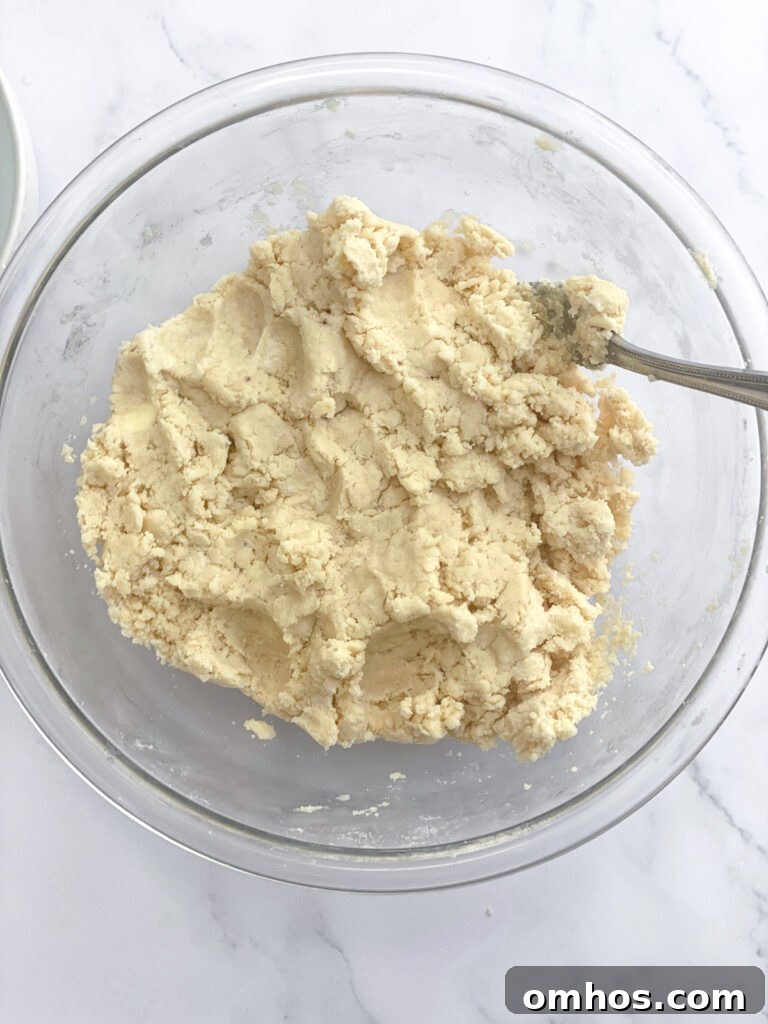
- Add 4 tablespoons of ice water and 1 tablespoon apple cider vinegar. Mix with a fork until the dough begins to hold together. Add additional water, one tablespoon at a time, only as needed until the dough can be shaped into a ball. The dough should be slightly shaggy but cohesive.
- Divide the dough into two discs, flatten slightly, wrap tightly in plastic wrap, and refrigerate for at least 2 hours. Chilling is essential: it firms the fats and relaxes the gluten, making rolling easier and helping the crust stay flaky.
ROLLING AND SHAPING THE DOUGH
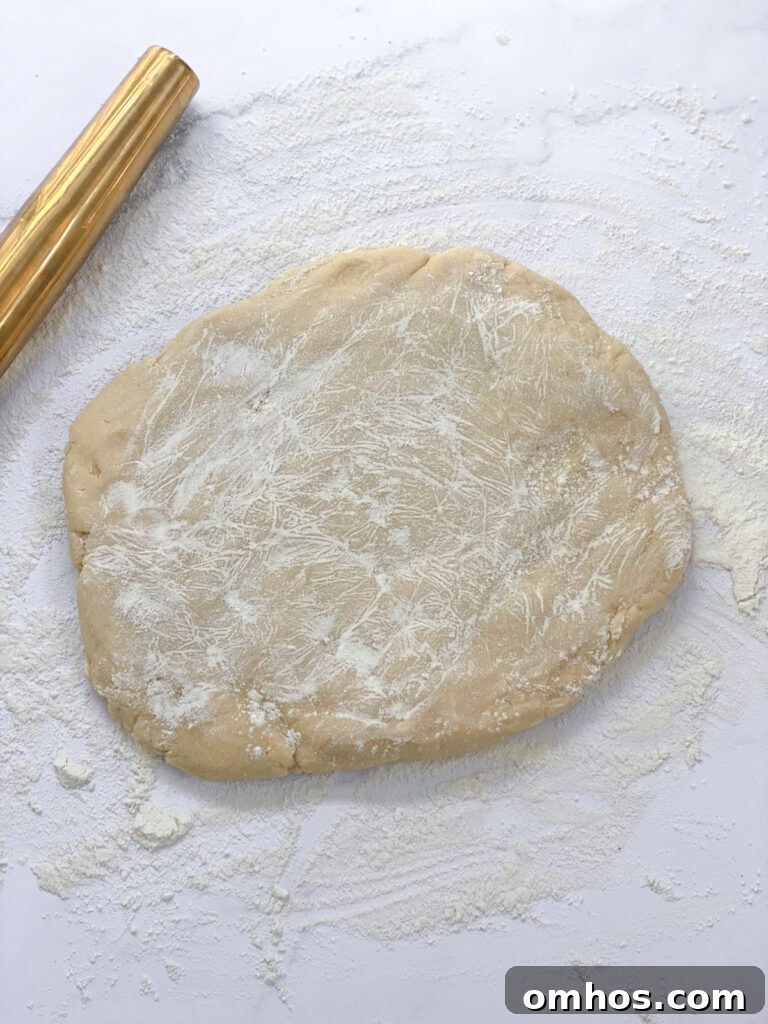
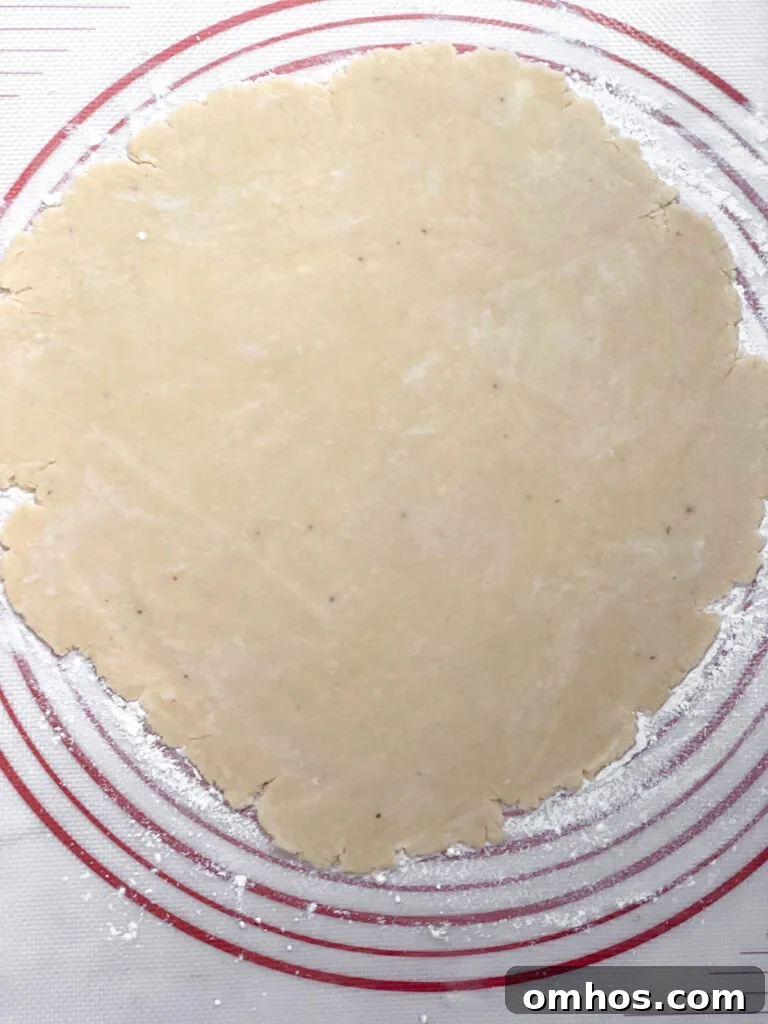
- Lightly flour a work surface and your rolling pin. Place a chilled dough disc on the surface, flour the top, and roll from the center outward until the circle is a few inches larger than your pie plate.
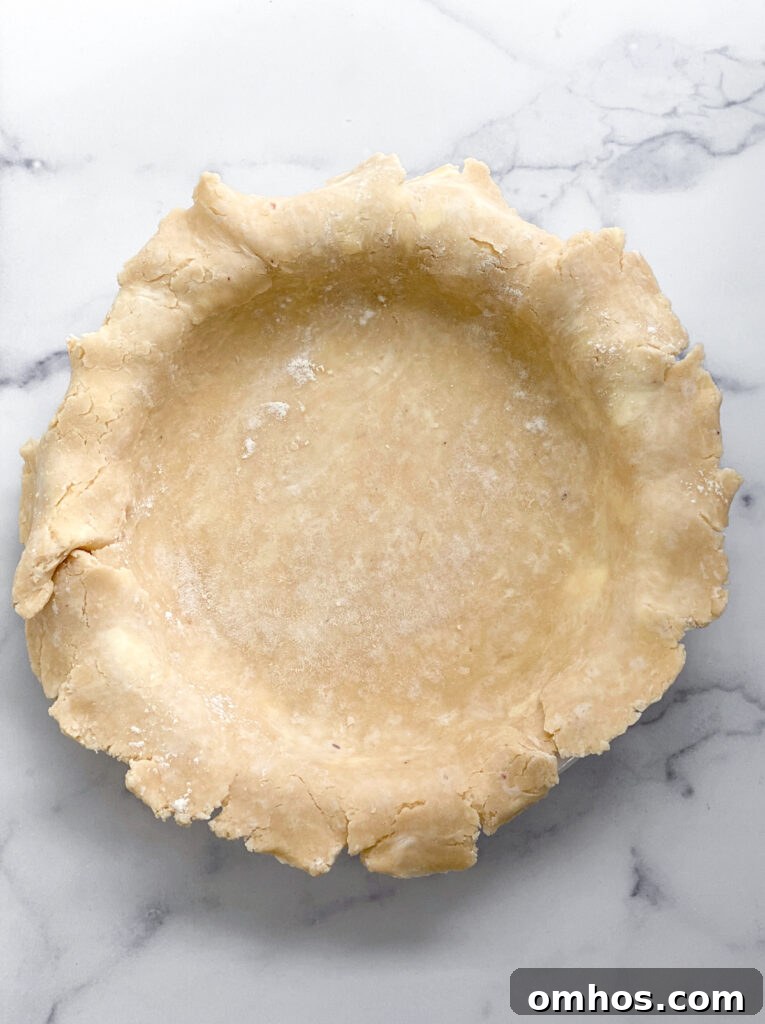
- To transfer, roll the pastry loosely around the rolling pin and unroll it over the pie plate. Trim the excess so the crust edge is even, then fold or tuck the overhang under itself to build a slightly thicker rim.
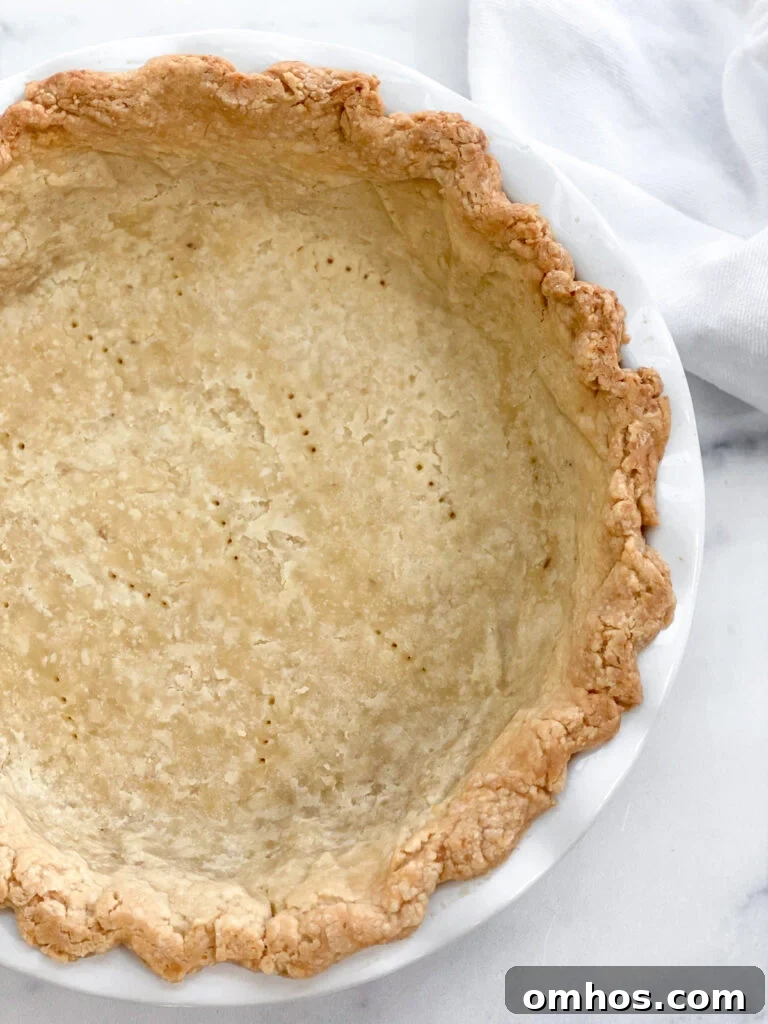
- Finish the edge with your choice of crimp, scallop, or fork pattern. Dock the bottom and sides lightly with a fork to prevent bubbling or excessive shrinking.
- Return the shaped crust to the freezer for 20 minutes before filling or blind baking. Chilling again helps the crust maintain its shape and crispness.
BLIND BAKING (PRE-BAKING) THE CRUST
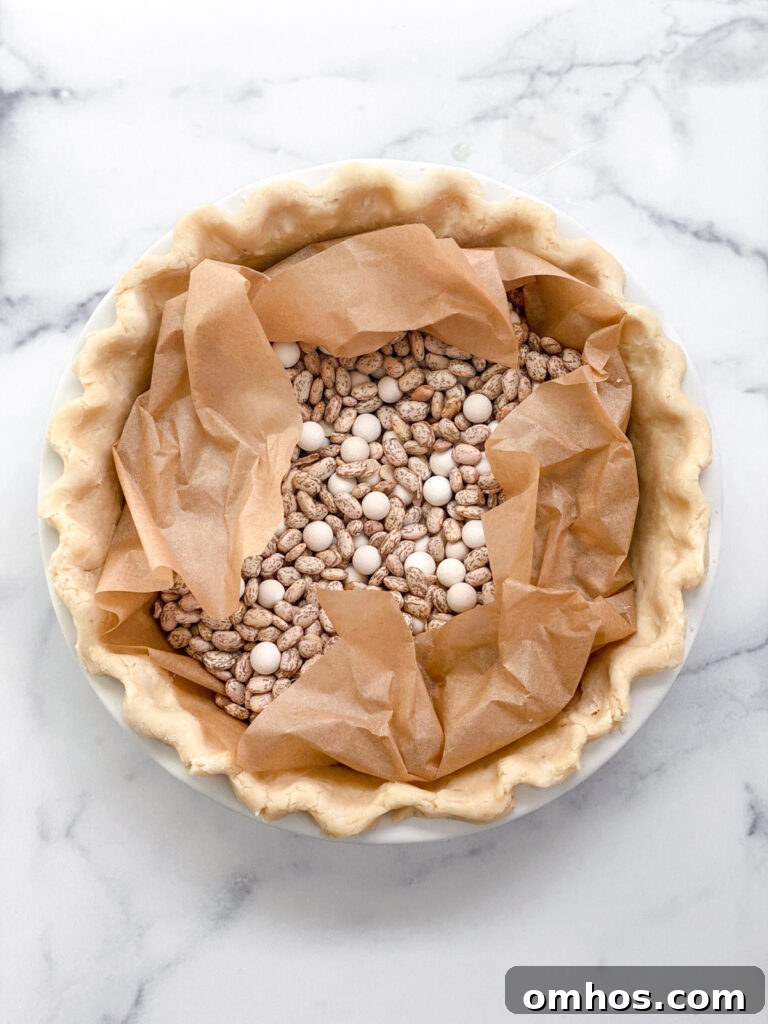
- When a recipe calls for a pre-baked shell, preheat the oven to 350°F (175°C). Line the chilled crust with parchment or foil and fill completely with pie weights, dry beans, or sugar to hold the shape and keep air pockets from forming.
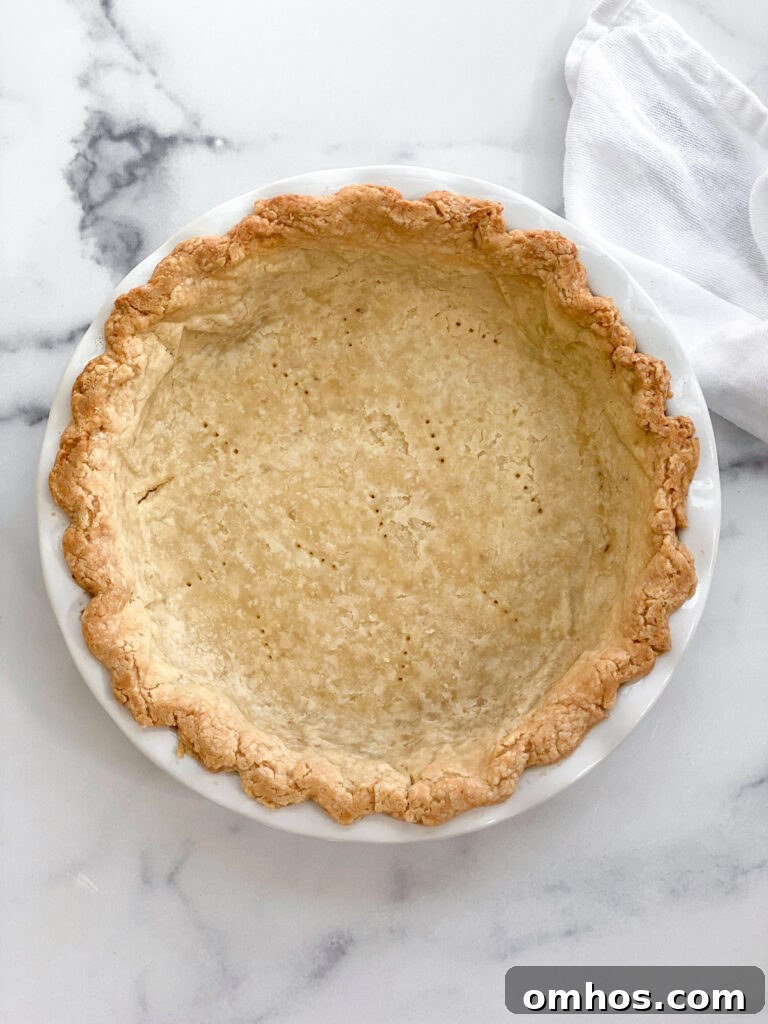
- Bake for about 50–60 minutes. Check at 50 minutes, remove the weights, and return the shell to the oven for another 5–10 minutes if the bottom needs additional browning. Let the crust cool completely before adding a no-bake filling.
WHY USE BOTH SHORTENING AND BUTTER?
Butter provides the best flavor, while shortening contributes tenderness and extra flakiness because it has a higher melting point and a different fat structure. Using both gives a balance of rich taste and a flaky, tender texture.
CAN I USE ALL BUTTER?
Yes. Substitute the shortening for an equal amount of cold butter if you prefer. The crust will taste more buttery and may be slightly less tender, but baking times remain essentially the same.
IF YOU DON’T HAVE A PASTRY BLENDER
Use a food processor in short pulses—be careful not to over-process. Two forks work well too. Avoid using warm hands to combine the fat into the flour because body heat will soften the butter and shortening and reduce flakiness.
SOME HELPFUL NOTES
- You can omit the sugar if you plan to use the crust for a savory pie.
- Chilling time is important—don’t skip it. It makes rolling easier and improves texture.
- Nutrition facts provided are for the full batch as assembled in the original recipe (one whole pie crust batch).
PIE IDEAS
Try this crust with citrus or custard pies, fruit pies, or a classic savory quiche. A lemon sour cream pie is one example that pairs nicely with this flaky crust. If you try the recipe, tag @thesaltedsweets on Instagram and share your results.
RECIPE SUMMARY
- Prep: 20 minutes active (plus 2 hours chilling)
- Cook (blind bake): about 50–60 minutes
- Yields: 2 crusts or 1 double-crust pie
- Ingredients and step-by-step instructions listed above
Nutrition (per full batch)
Calories: 1771 kcal; Carbohydrates: 149 g; Protein: 20 g; Fat: 122 g; Saturated Fat: 57 g; Sodium: 1778 mg; Fiber: 5 g; Sugar: 7 g. These values are provided for reference.