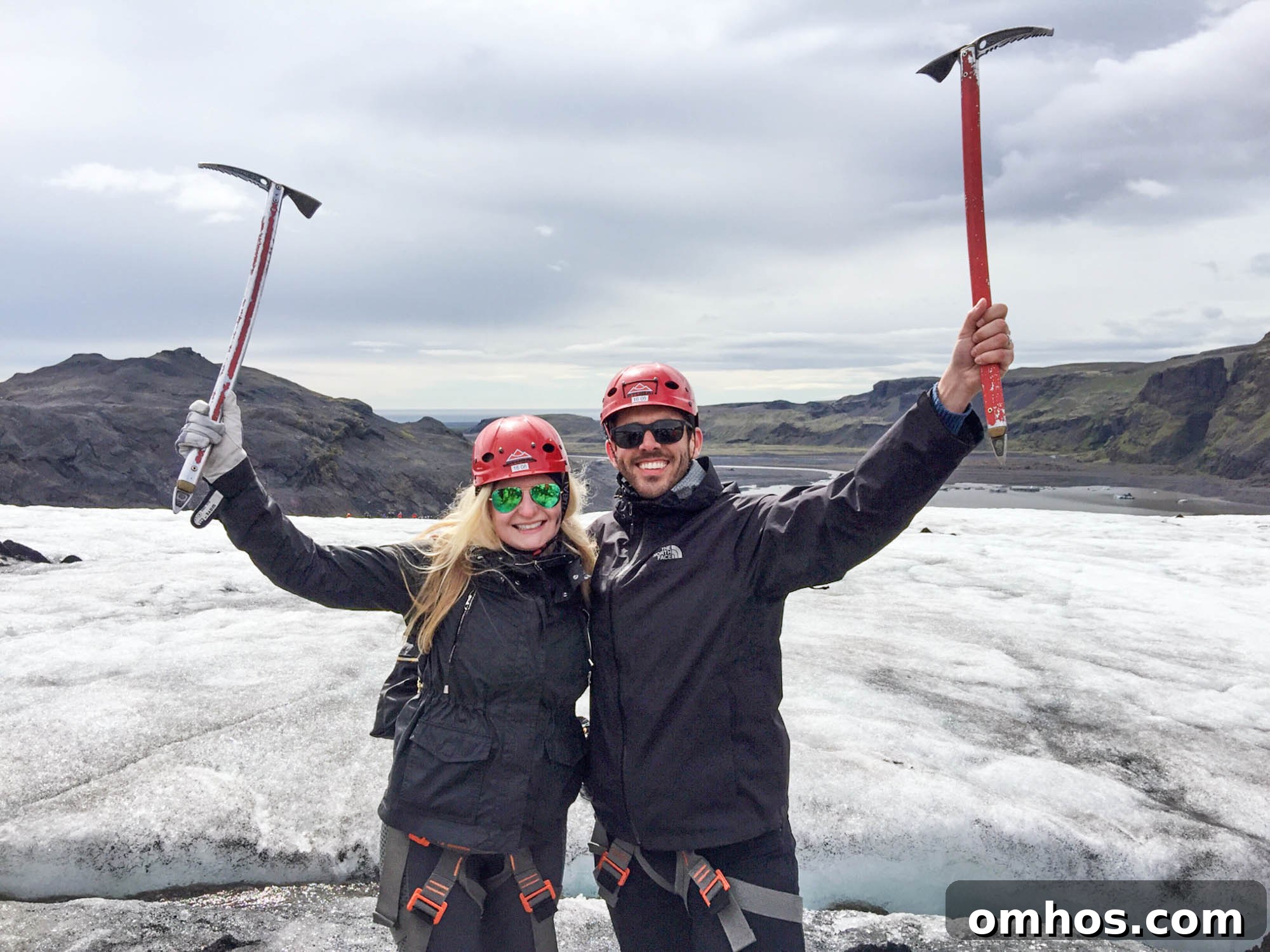
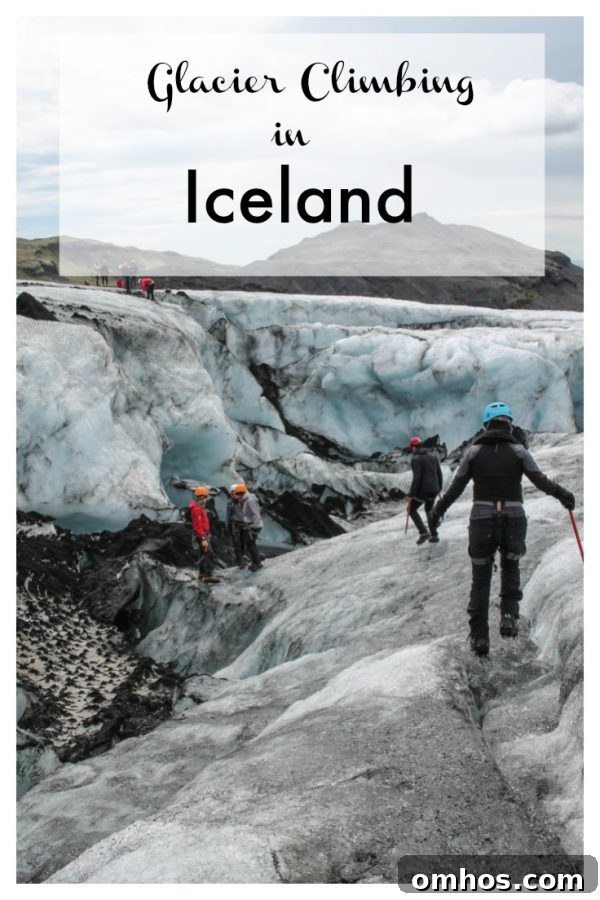
Iceland is a country made for explorers. From diving between tectonic plates and hiking inside volcano craters to snowmobiling on glaciers and mountain biking across lava fields, the island offers countless adventure activities. On our trip we decided to spend one day doing something truly memorable: glacier climbing.
We booked a guided glacier tour with Mountain Guides, a company that runs small-group adventure outings. The tour picked us up in Reykjavik at 8:30 a.m. and we drove roughly two and a half hours toward the glacier, stopping along the way to take in the dramatic contrasts of Iceland’s landscape—black volcanic rock, bright green moss, and distant snow-capped peaks.
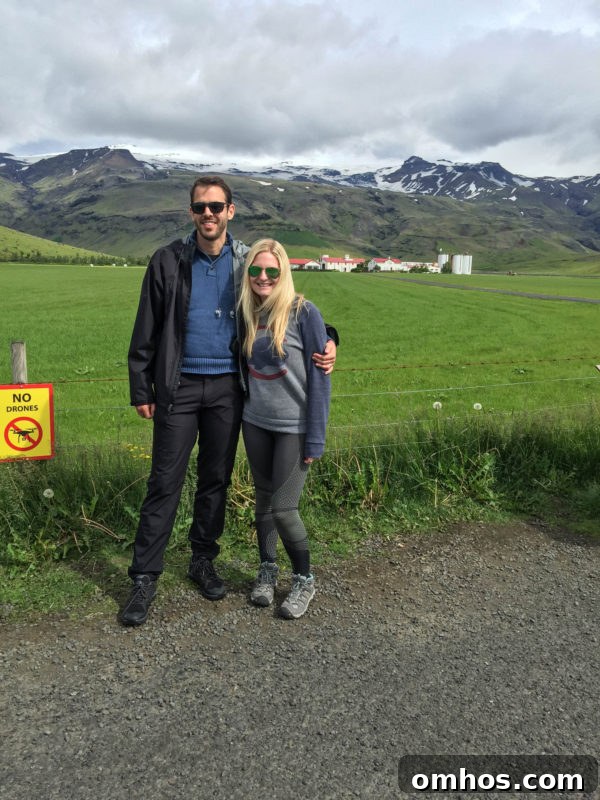
We pulled over for photos by a row of snow-covered mountains. It’s a great reminder of the island’s paradox: despite its name, Iceland contains large green plains and mossy lava fields next to glaciers and snow. The scenery is striking and constantly changing as you drive.
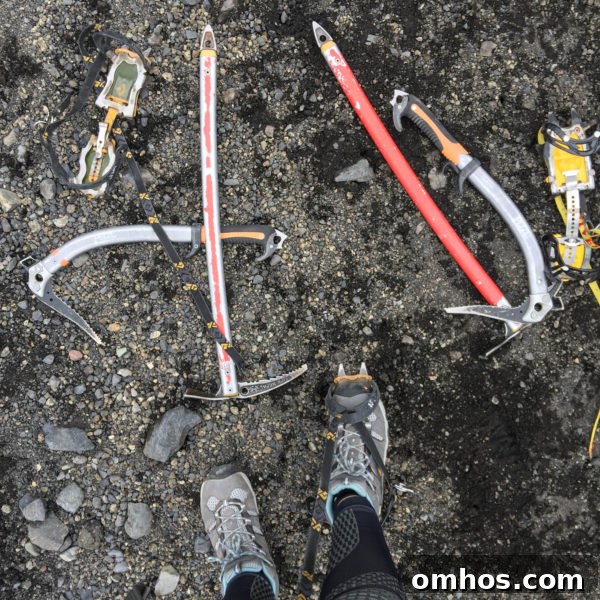
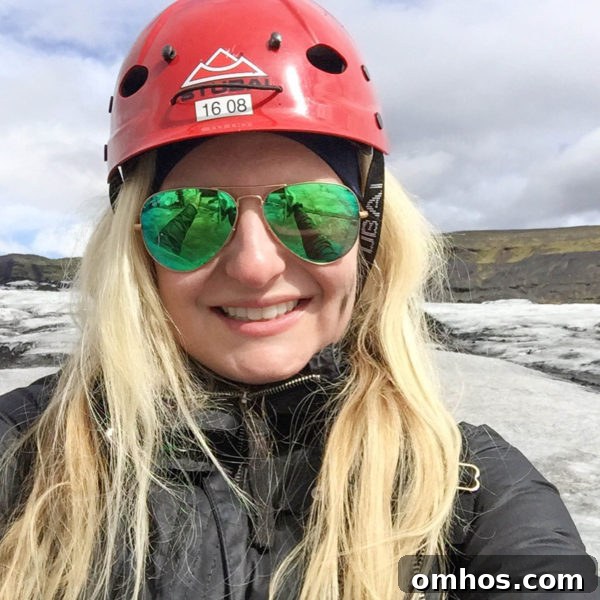
When we arrived at the glacier we were fitted with harnesses, helmets, and crampons. The crampons strap over hiking boots and have metal spikes that make walking on steep ice secure and allow you to anchor your foot when climbing. The guides gave clear instruction on how to use the equipment and how to move safely across crevassed terrain.
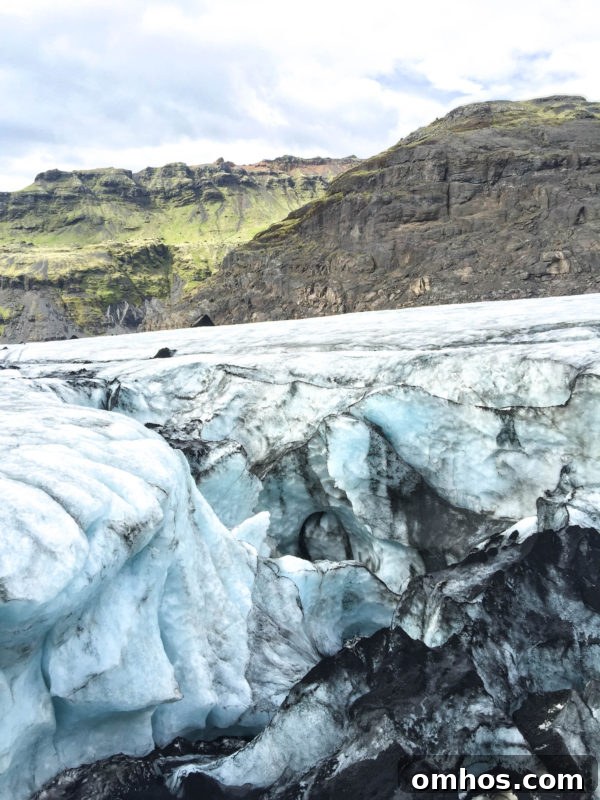
Glacier climbing was more physically demanding than I expected. In the weeks before Iceland I had hiked volcanoes in Costa Rica and gone canyoneering in Utah, so I felt prepared, but the ice required constant concentration and steady strength. The guides set up a range of climbs on the glacier, and climbers could choose routes that matched their comfort and fitness levels.
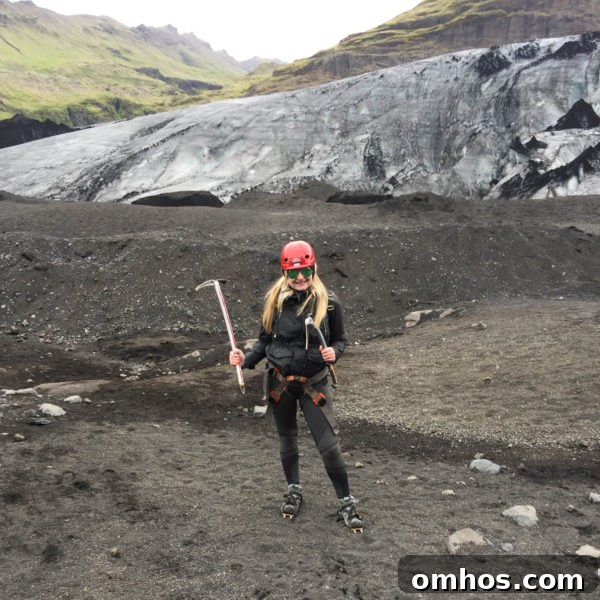
Not everyone on the tour chose to climb. For those who preferred a less intense experience, the option to simply hike across the glacier and explore ice formations was available. I attempted a challenging route first and then took a shorter climb afterward; both felt rewarding in different ways. The sense of accomplishment at the top of even a short ice wall is hard to describe.
One striking feature of the glacier was the dark streaks and patches of volcanic ash embedded in the ice. Iceland’s volcanic activity leaves layers of ash that become trapped in glacier ice. As the glacier melts and shifts, those ash deposits can form distinct dark lines and piles on the surface, adding dramatic contrast to the blue and white ice.
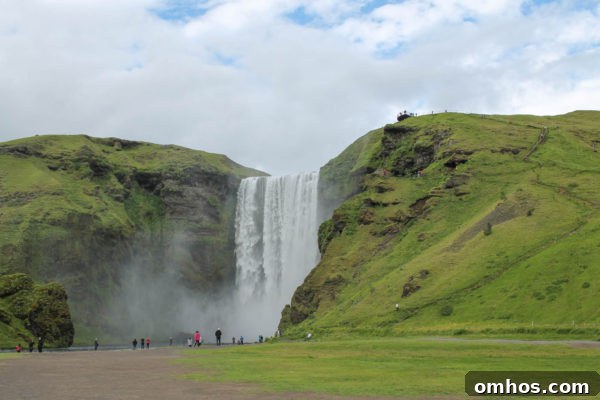
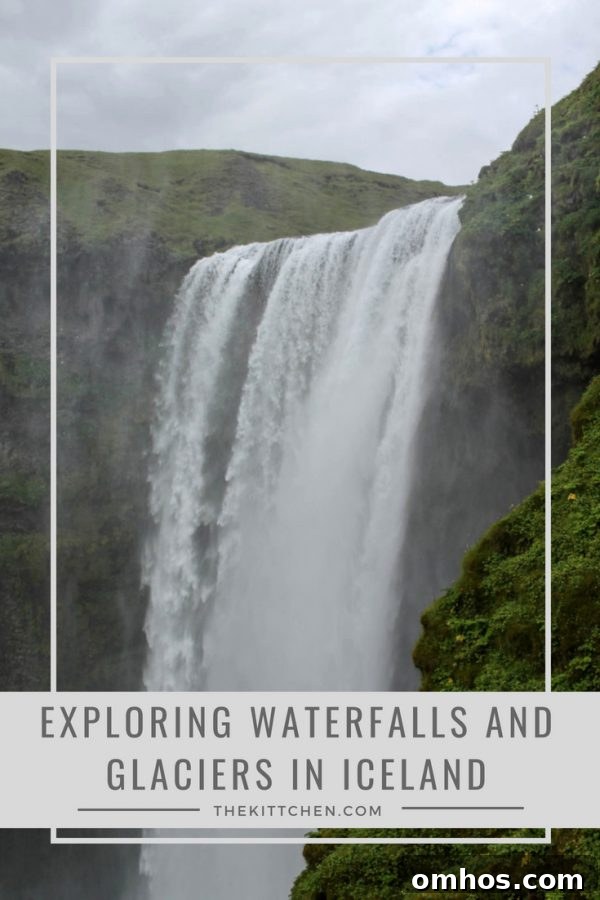
On the drive back toward Reykjavik we stopped at two iconic waterfalls. The first, Skógafoss, is massive and powerful, carved into steep green cliffs. If you visit, be prepared for spray—rain gear is essential if you want to get close for photos. The mist rises high enough to soak you without warning, but it also makes for dramatic, rainbows-filled shots when the sun comes out.
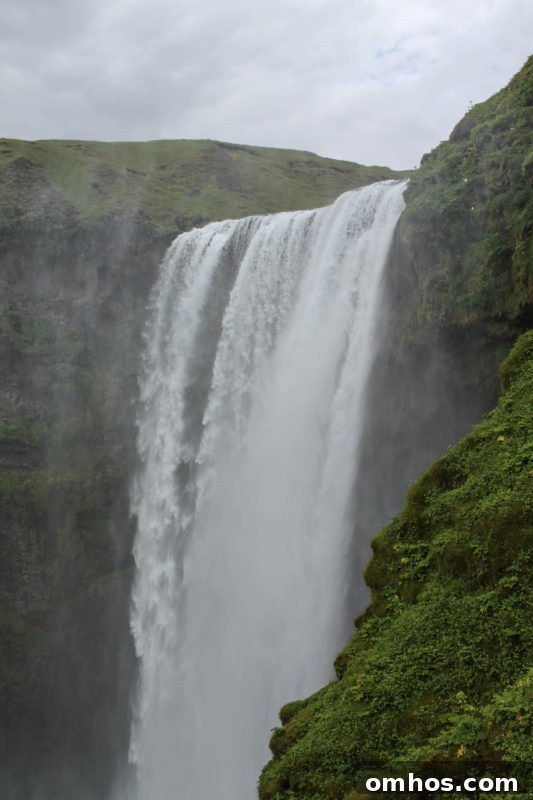
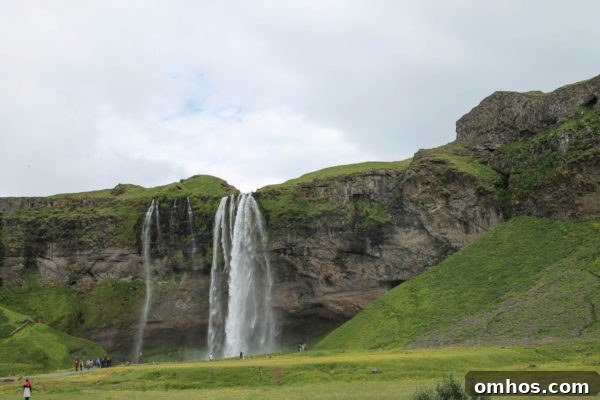
A short drive away is Seljalandsfoss, another beautiful waterfall that’s famous because you can walk behind it. The path behind the falls gives a unique vantage point through the curtain of water—again, expect to get wet and wear waterproof layers and sturdy shoes for slippery ground.
Back in Reykjavik we wanted something warm and satisfying, so we stopped at Noodle Station downtown for big bowls of noodle soup. It was the perfect way to warm up and refuel after a long, cold day on the ice. Good, affordable meals can be harder to find in Reykjavik, so it was a welcome and budget-friendly option.

Glacier climbing in Iceland blends technical challenge with spectacular scenery. Whether you want a strenuous climb or a guided hike across ancient ice, the experience leaves a strong impression: the feel of the crampons beneath your feet, the hush of the ice fields, the contrast of volcanic ash and blue ice. It’s an adventure I’d recommend to anyone who enjoys physical activity and spectacular natural settings.

Next week I’ll finish my Iceland trip recap with a look at the Golden Circle, a classic road trip that includes some of the country’s most famous natural wonders. For this day, though, glacier climbing and waterfall visits captured the best of Iceland’s wild, contrasting beauty.
For this trip I relied on a dependable pair of Keen Koven hiking boots, which performed well during both canyoneering and glacier climbing.