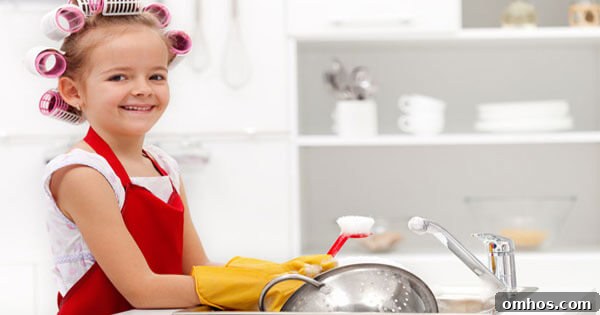
Here is a list of age-appropriate chores for kids, showing tasks they can handle at different ages plus practical tips to organize your family’s household chores.

Age-Appropriate Chores for Kids
Teaching children chores helps them build life skills, responsibility, and confidence. Start early with simple tasks and increase responsibility as they grow. Assigning age-appropriate chores reduces stress at home and prepares kids for independence as they mature.
It’s easy to fall into the trap of rescuing kids from small responsibilities, but doing so can create entitled behavior later. Begin with small, manageable jobs and expand their role over time. In our household of five children, we rotate chores weekly so one child doesn’t always get the same tasks.
Chores for 3-Year-Olds
- Get dressed independently
- Put away pajamas
- Brush teeth and wash face
- Comb hair
- Make bed (use a simple sleeping bag or easy-to-manage bedding)
- Pick up toys and tidy their bedroom
- Put clothes in the laundry hamper
- Help set the table
- Clear dishes from the table and help rinse or place dishes in a drainer
- Empty small wastebaskets
- Help hang wet laundry on a drying rack
Chores for 4–5 Year Olds
Establish a simple morning rule: chores first, then play or screen time. Add these tasks to the list for younger preschoolers:
- Bring in the newspaper or mail
- Unload the dishwasher (safe items like plastic cups and utensils)
- Unload silverware or small items
- Haul small bundles of wood or help with yard pickup
- Dust their rooms
- Help fold small laundry items like washcloths and underwear
- Put away folded laundry
- Feed pets with supervision
Chores for 6–7 Year Olds
Children in early elementary school can handle more responsibility. Keep the same morning rule and expand tasks like these:
- Take out the garbage
- Sweep porches and floors
- Sort toys and donate items they no longer use
- Wipe down bathroom sinks
- Pull weeds and help with simple yard tasks
- Help fold laundry and put away their own clothes
Chores for 8–9 Year Olds
- Iron simple items such as pillowcases (with supervision)
- Clean sliding door glass, windows, and mirrors
- Remove fingerprints from doors and walls
- General dusting and deeper tidying
- Assist more independently with folding and organizing laundry
After Age 10
- Change their own sheets
- Clean the bathroom
- Clean up the kitchen, including wiping counters and loading the dishwasher
- Vacuum and scrub floors
- Help wash the car
- Perform yard work such as mowing, weeding, and spreading mulch
- Start cooking and baking basics; make their own breakfast
- Walk the dog
Teen Responsibilities
Teens should complete household tasks before taking on jobs or social plans. Build on earlier skills and add:
- Babysit younger siblings
- Wash and vacuum the car
- Do their own laundry start to finish
- Plan and cook full meals
- Perform larger yard jobs and general household maintenance
How We Manage Chores at Home
We use a weekly rotation system with chore charts on the refrigerator. Each child has a “chore week” and the chart shows who is responsible for daily tasks and the less popular jobs. Rotating chores helps keep things fair and teaches every child how to complete different tasks.
Daily chores are assigned for consistency, while extra chores like mowing or deep cleaning are scheduled on weekends as needed. Below is an example of how we split daily responsibilities among five children.
Child #1
- Washes dishes or loads the dishwasher
- Wipes bathroom sink and mirror
- Shakes rugs
Child #2
- Dries and puts away dishes
- Cleans the toilet
- Helps younger children pick up toys
Child #3
- Clears and wipes the table
- Empties and takes out kitchen trash
- Cleans the shower
Child #4
- Clears and wipes counter or bar areas
- Empties bathroom trashcans
- Cleans the tub and cleans windows/mirrors
Child #5 (6 years old)
This younger child has a limited set of tasks until he joins the full rotation:
- Unloads silverware from the dishwasher
- Empties office and bedroom trash
- Feeds the dog
Practical Tips to Get Kids Doing Chores
- Use pictures for chore charts if children are too young to read.
- Create a separate Saturday list for bigger jobs like mowing or deep cleaning.
- Turn chores into a game or set a 10-minute timer for quick cleanups.
- Ask kids to pick up a set number of items or to collect toys of a chosen color.
- Let toddlers help with simple tasks so they learn early—putting things in a laundry basket, returning toys to shelves, or arranging pillows.
- If one system isn’t working, try another—different families organize chores in different ways.
- Avoid micromanaging. If children try their best, allow imperfect results while teaching proper methods over time.
- Break big tasks into smaller steps: instead of “clean your room,” ask for “all dolls put away” or “all clothes in the hamper.”
- Make it easy for kids to help: store commonly used items on lower shelves and keep a step stool accessible.
- Set clear consequences: if chores aren’t done, temporarily restrict privileges until responsibility improves.
- Consider an allowance or credit system tied to chores, or require kids to “earn back” privileges or items if they don’t complete tasks.
- When asking for help from family members, accept their way of doing things unless you are teaching proper technique—avoid constant criticism.
- Once a child reliably performs a chore, begin checking for quality and provide gentle corrections and expectations.
- Use a simple visual guide—a drawn place setting on a placemat—to teach table setting; laminate it for repeated use.
These strategies will help you organize chores, teach responsibility, and prepare kids for independent life. Consistency, patience, and age-appropriate expectations go a long way in raising capable, confident children.