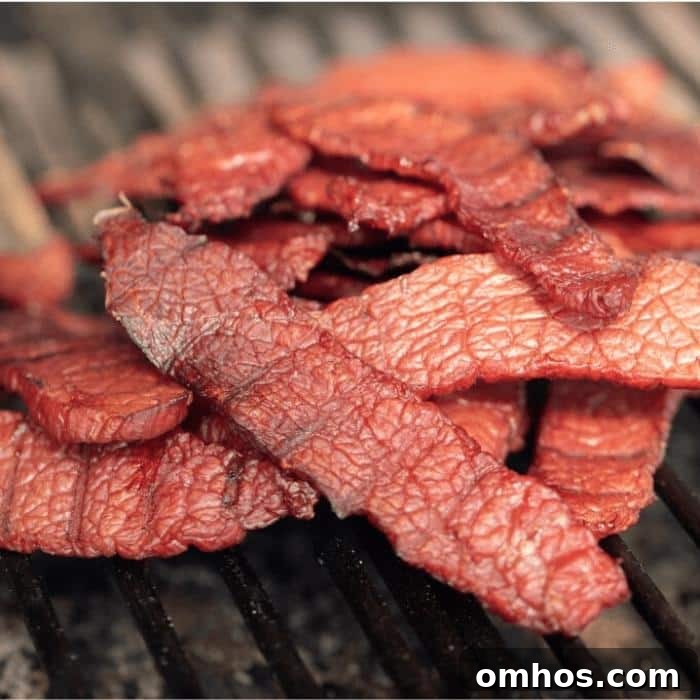
This corned beef jerky is a simple, delicious way to make jerky at home using just a corned beef roast and heat. No special marinades or seasonings are required — the cured flavor of the corned beef plus smoke (or low, dry heat) creates a tender, flavorful jerky that’s easy to prepare.
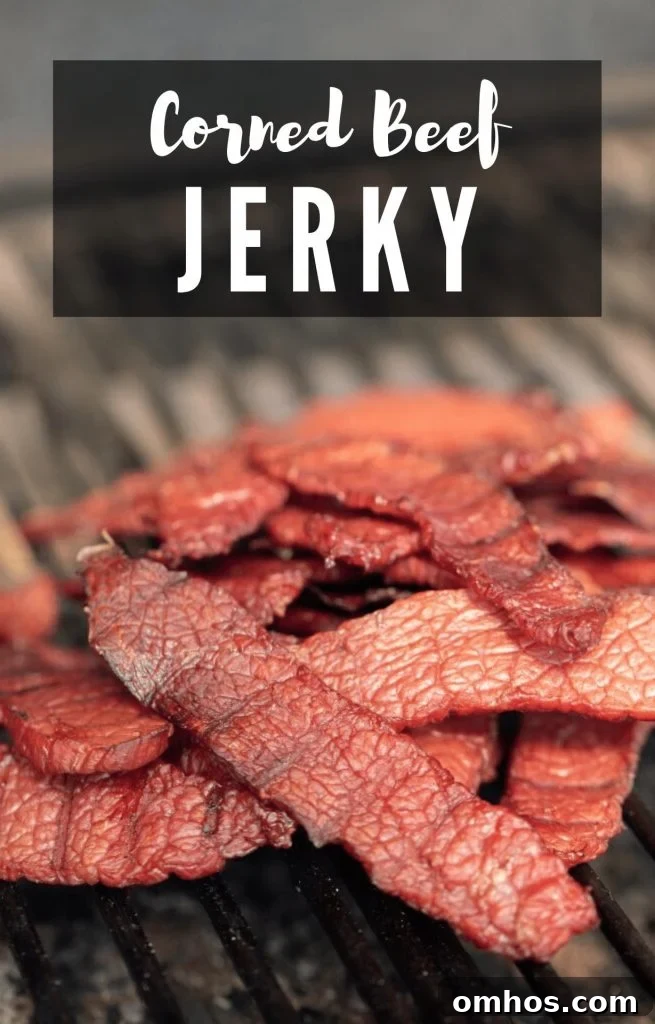
Homemade Corned Beef Jerky
This idea started when we noticed a corned beef roast while shopping and wondered if it could become jerky. The answer is yes. Choose a lean cut such as a top round or flat cut corned beef roast — avoid very fatty cuts so the jerky dries properly and stores well. Trim any excess fat before slicing.
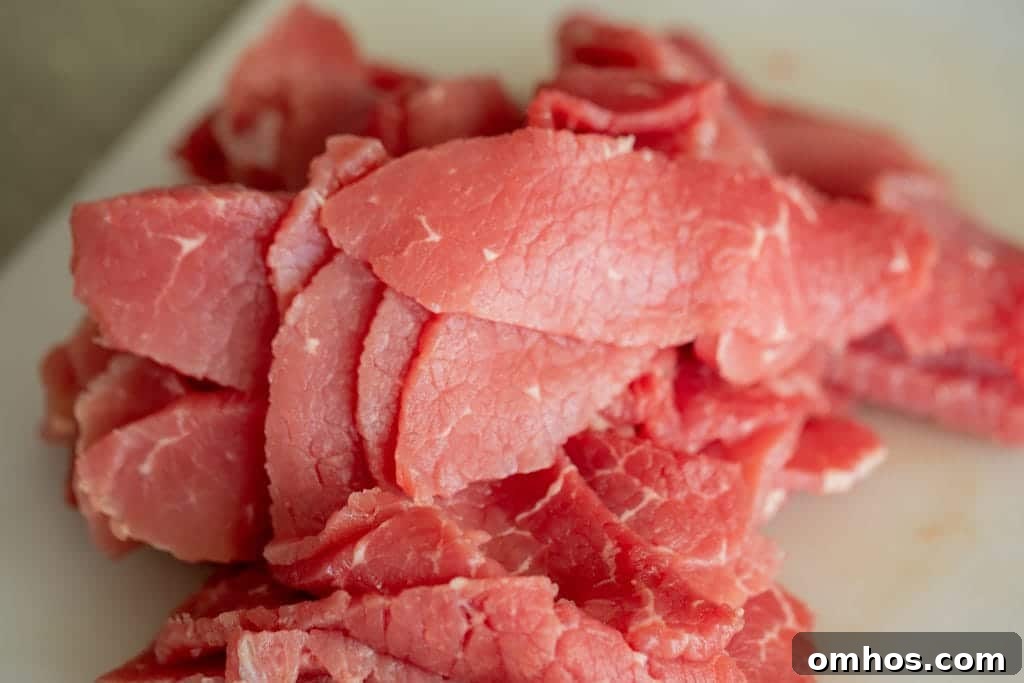
For ease of slicing, chill the roast until it is very cold; a brief time in the freezer (30–60 minutes) firms the meat and makes thin, even slices easier to cut. Slice against the grain for the best chew; thin strips dry faster and give the classic jerky texture.
How to Make Corned Beef Jerky
Making corned beef jerky is straightforward and fast. You can use a smoker, oven, or dehydrator — the key is low, even heat and time. Follow these steps for reliable results.
- Trim and slice. Remove any visible fat. Using a sharp knife, slice the corned beef into thin strips against the grain. Aim for uniform thickness so slices dry evenly.
- Preheat your equipment. Set your smoker, oven (prop the door slightly), or dehydrator to about 170°F (75°C). This temperature dries the meat without cooking it aggressively.
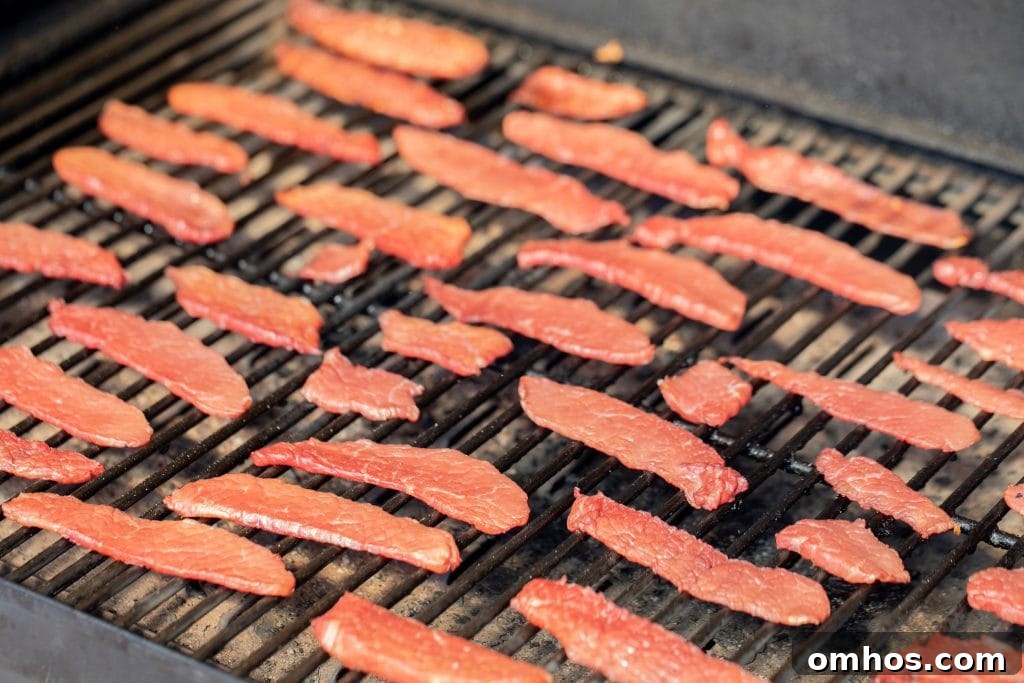
- Dry or smoke the strips. Lay the strips on a rack or grill grate in a single layer without overlapping. Dry or smoke for approximately 2–3 hours for thin slices. Thicker pieces may need up to 4–5 hours. Check after the first hour and periodically to ensure even drying. Finished jerky should be firm but still slightly pliable; if it snaps when bent, it has dried too long.
- Steam briefly to rehydrate. While still warm, transfer the jerky to a large resealable plastic bag and close the seal most of the way, leaving a small opening so steam can escape slowly. Let the jerky sit in the bag for a short time to reintroduce some moisture and improve texture.
Store finished corned beef jerky in the refrigerator for best shelf life. Properly dried and chilled jerky will keep well for a couple of weeks; always use clean hands or utensils when handling to avoid contamination.
More Corned Beef (and Cabbage!) Recipes
If you enjoy corned beef and smoked flavors, try these variations and ideas:
- Smoked corned beef with braised vegetables
- Bacon-wrapped smoked cabbage
- Home-cured corned beef or pastrami
Smoking vegetables and meat together adds depth and helps cook them evenly. Use low, steady heat and monitor internal temperatures for best results.
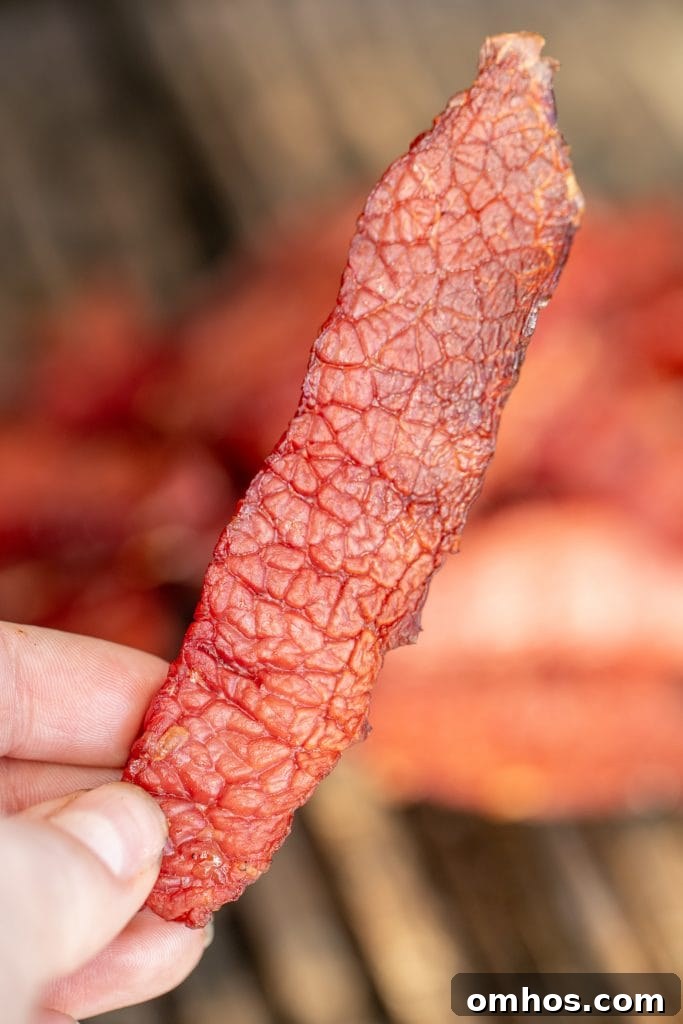
Corned Beef Jerky Recipe
Simple Corned Beef Jerky — a no-fuss recipe that highlights the cured meat’s flavor. This yields tender, smoky jerky with minimal prep.
Ingredients
- 2–3 pound corned beef roast (top round or flat cut), trimmed of excess fat
Yields: about 4 servings (depends on roast size)
Prep time: 15 minutes (plus optional chilling)
Cook time: 2–5 hours depending on slice thickness
Total time: 2–5 hours 15 minutes
Instructions
- Preheat your smoker, oven (propped open slightly), or dehydrator to around 170°F (75°C).
- Trim visible fat from the roast. Chill the meat briefly if needed to make thin slicing easier.
- Slice the roast into thin, even strips against the grain.
- Arrange strips in a single layer on a rack or grate. Dry or smoke for 2–3 hours for thin slices; thicker slices may require 4–5 hours. Rotate or rearrange if some areas dry faster than others.
- When jerky is firm but slightly flexible, remove it from heat. Place the warm jerky in a large resealable bag, leaving a small opening to allow gentle steaming for a few minutes. This softens the surface and improves chew.
- Store cooled jerky in the refrigerator and consume within 2–3 weeks for best quality.
Nutrition (approx. per serving): Calories: 449 kcal | Carbohydrates: 1 g | Protein: 33 g | Fat: 34 g | Saturated Fat: 11 g | Cholesterol: 122 mg | Sodium: 1760 mg | Potassium: 674 mg | Vitamin C: 61 mg | Calcium: 16 mg | Iron: 4 mg
Nutrition values are estimated and intended as an approximation.