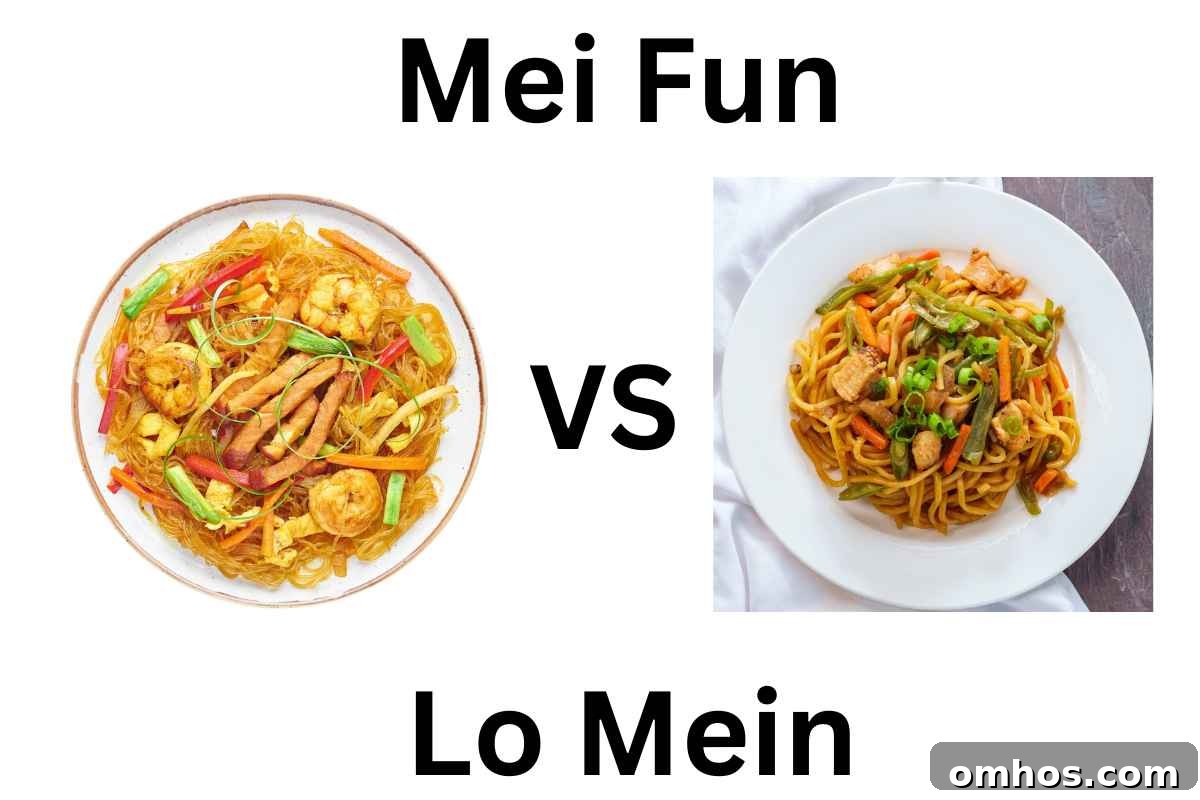
What is Mei Fun?
Mei Fun (often spelled “mei fun” or called rice vermicelli) is a traditional Chinese noodle made primarily from rice and water. Popular throughout Asia and around the world, these thin rice noodles are prized for their lightness and versatility. While authentic mei fun contains only rice and water, some commercial versions add other ingredients for texture or color. In many kitchens, mei fun appears interchangeably as vermicelli, rice noodles, or rice sticks.
How does Mei Fun look?
Dry mei fun typically comes bundled or coiled and appears semi-translucent with a whitish core. When properly rehydrated or cooked, it turns completely white and becomes soft and pliable. Pure rice versions are naturally gluten-free, making them a good option for people avoiding wheat. Some varieties include additions such as beans, tapioca, egg, or wheat, so it’s always best to check packaging if you need a gluten-free product.
What kind of Mei Fun dishes are there?
The term “mei fun” can refer to the noodle itself or to dishes that use it—examples include Singapore mei fun and chow mei fun. Dishes with mei fun generally feature a flavorful sauce, crisp vegetables, and a protein like shrimp, pork, or egg. Common vegetables paired with mei fun include cabbage, green onions, carrots, and bean sprouts. The noodle’s mild flavor and delicate texture are intended to complement crunchy ingredients rather than dominate the dish.
How to cook with Mei Fun?
Dry rice vermicelli is simple to prepare: cover the nests with hot (not boiling) water and let them soak until soft, then drain. Because mei fun is often finished in a stir-fry or soup, avoid overcooking during rehydration so it retains a slightly firm, springy bite. Once rehydrated, the noodles absorb sauces and combine well with stir-fried vegetables and proteins.
What is Lo Mein?
Lo Mein literally means “tossed” or “stirred noodles” and refers both to a style of preparation and to the wheat-based noodles typically used. Unlike rice vermicelli, lo mein noodles are made from wheat flour and egg, which gives them a richer flavor, a yellowish color, and a chewier texture. The name emphasizes the method—noodles are tossed with vegetables, meats, and sauce to finish the dish.
What does Lo Mein look like?
Lo mein noodles are thicker and more substantial than rice vermicelli, with a slightly yellow hue from the egg. They hold sauces well and are often described as soft and springy rather than crisp. Because they contain wheat and egg, lo mein noodles are not gluten-free.
How to cook Lo Mein?
Lo mein noodles are usually parboiled for a couple of minutes until just tender, then drained and finished by tossing with stir-fried vegetables, proteins, and sauce. Avoid overcooking: the noodles should remain springy so they hold up during the final toss and do not become mushy.
What is the difference between Mei Fun and Lo Mein?
Although both are staples in Chinese cooking, mei fun and lo mein differ in ingredient makeup, appearance, texture, and common uses. Mei fun is a rice-based, thin, often brittle-looking noodle that becomes white and slightly crisp when cooked. Lo mein is a wheat-and-egg noodle that is thicker, yellowish, and chewier, absorbing sauces more readily.
1. Ingredients
Mei fun is typically made from rice and water, which makes authentic versions naturally gluten-free. Lo mein is made from wheat flour and eggs, so it contains gluten and has a richer taste and firmer chew.
2. Cooking Time
Dry mei fun usually requires a longer soak or brief parboil (depending on manufacturer instructions) to rehydrate, while fresh lo mein noodles need just a few minutes in boiling water before they’re ready to be tossed in a stir-fry. Both benefit from minimal initial cooking because they finish cooking in the pan or broth.
3. Appearance
Mei fun: delicate, white, and semi-translucent when dry; white and soft when cooked. Lo mein: thicker, yellowish from egg, and more substantial in appearance.
4. Texture
Mei fun tends to retain a slight bite and can stay somewhat crisp when prepared correctly; it may clump slightly and benefit from a light touch of oil to separate strands. Lo mein is fuller-bodied and softer, offering a chewy mouthfeel that pairs well with saucy preparations.
5. Flavor
Mei fun has a mild, subtly sweet rice flavor that complements stronger sauces and crunchy vegetables. Lo mein offers a fuller wheat-and-egg flavor and absorbs sauces more readily, creating richer, more savory bites.
6. Applications in cooking
Both noodle types work in stir-fries and soups, but they play different roles: mei fun is ideal when you want a light, textural contrast—think spring rolls, light stir-fries, or clear soups—while lo mein is better suited to saucier dishes, broths, or hearty stir-fries with meat and mushrooms.
Are Mei Fun and Lo Mein the same?
No. Mei fun primarily denotes a type of rice noodle, whereas lo mein refers to a wheat-and-egg noodle and a method of preparation. Though both appear on many Chinese menus and are often served with similar vegetables and proteins, their ingredients, textures, and culinary roles are distinct. Quick identification tips: if the noodle is white and delicate, it’s likely mei fun; if it’s soft, chewy, and yellow-tinted, it’s likely lo mein. Either way, both make excellent bases for flavorful, satisfying dishes.