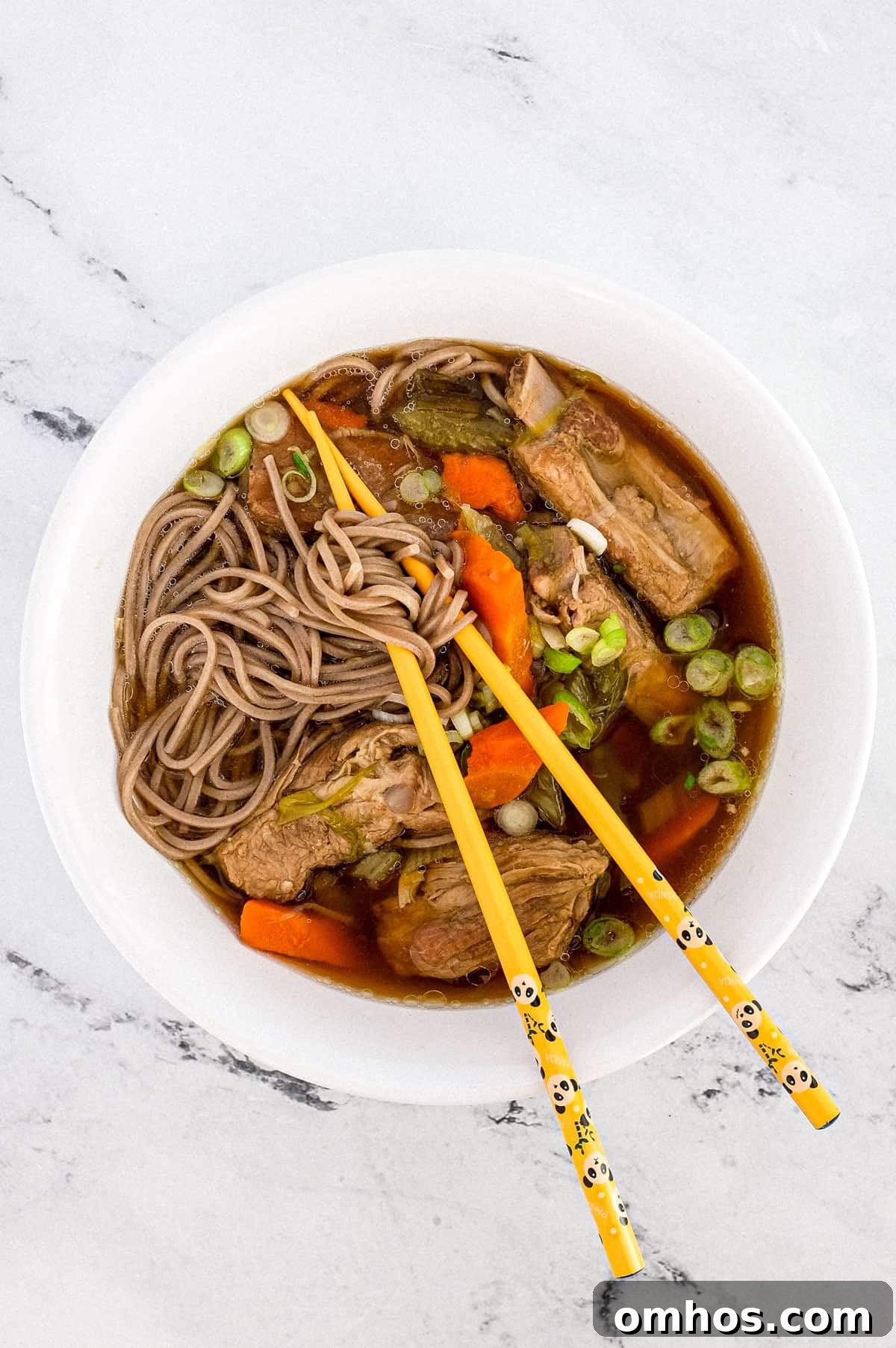
Pork Rib Soup with Noodles
By Lee Jackson ↣ Published on: April 15, 2022
↣
2 Comments
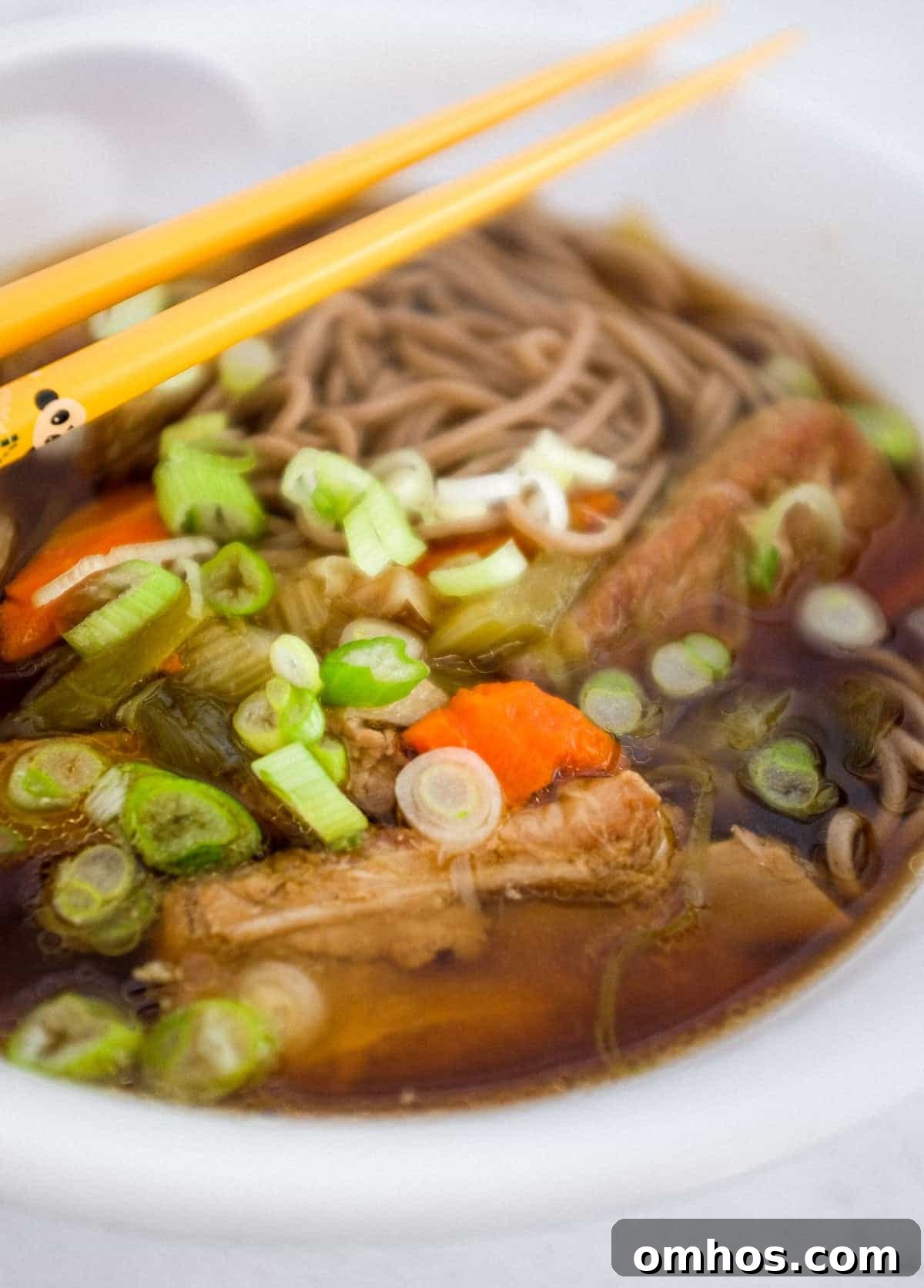
This pork rib soup features juicy, tender pork spare ribs bathed in a fragrant, umami-rich pork broth. Soba noodles bring a nutty flavour and pleasant texture, creating a comforting bowl that’s both humble and deeply satisfying.
This Pan-Asian pork rib soup blends influences from China and Japan. Slow-cooked pork spare ribs yield fall-off-the-bone meat and a surprisingly aromatic broth. Traditionally served as a clear, restorative soup, it also works beautifully as a noodle soup when paired with your favourite Asian noodles — in this recipe I use soba for their nutty character.
I’ve made spare rib soup for years. It’s a hands-off dish that rewards patience: a low simmer melds flavours and produces a clean, full-bodied broth. You can keep it simple with just ribs and vegetables, or add noodles to make it a complete meal. Soba has become my go-to, but this soup is versatile enough for egg, rice, glass, ramen, or udon noodles.
What’s ahead?
Read on for a flavour overview, ingredient notes, step-by-step cooking instructions, useful tips for storage and reheating, and a complete ingredient and method list so you can make this comforting pork rib noodle soup at home.
What are soba noodles?
Soba noodles are made from buckwheat flour and have a characteristic brown tone. They offer a pleasant nutty, earthy flavour and a soft but slightly firm texture. In Japan they are enjoyed both cold (with dipping sauce) and hot in soups, making them an excellent companion for this pork rib broth.
Why it works
- The long, gentle simmer extracts gelatin and flavour from the pork bones, producing a restorative broth with a rich mouthfeel.
- Slow-cooked ribs become meltingly tender and add real depth and satisfaction to each bowl.
- Soba noodles contribute a nutty, slightly chewy contrast that balances the rich broth and soft meat.
Stuff you’ll need
This soup is ideal for a slow simmer: set it and let it do most of the work. There are relatively few ingredients, but each one builds layers of flavour.
- Pork spare ribs — choose meaty ribs; they provide both tenderness and flavour for the broth.
- Aromatics — scallions, garlic, ginger, carrot and celery add bright, balanced notes.
- Umami — a combination of dark and light soy sauces, plus rice vinegar for a touch of acidity, gives the soup its savoury backbone.
- Soba noodles — my favourite here, though rice, egg, glass or ramen noodles all work fine.
Step by Step
This pork rib noodle soup is uncomplicated. The key is time: a low, steady simmer builds a clear, flavourful broth.
- Brown the ribs — searing adds colour and a flavour boost.
- Blanch the ribs — boil briefly (3–4 minutes) to draw out impurities; drain and rinse for a clearer broth.
- Simmer slowly — combine ribs, aromatics and seasonings, then cook barely simmering for about 2½ hours for a clean, full-flavoured stock.
- Cook the noodles separately — boil soba for around 7 minutes (times vary by noodle type), drain and portion into bowls.
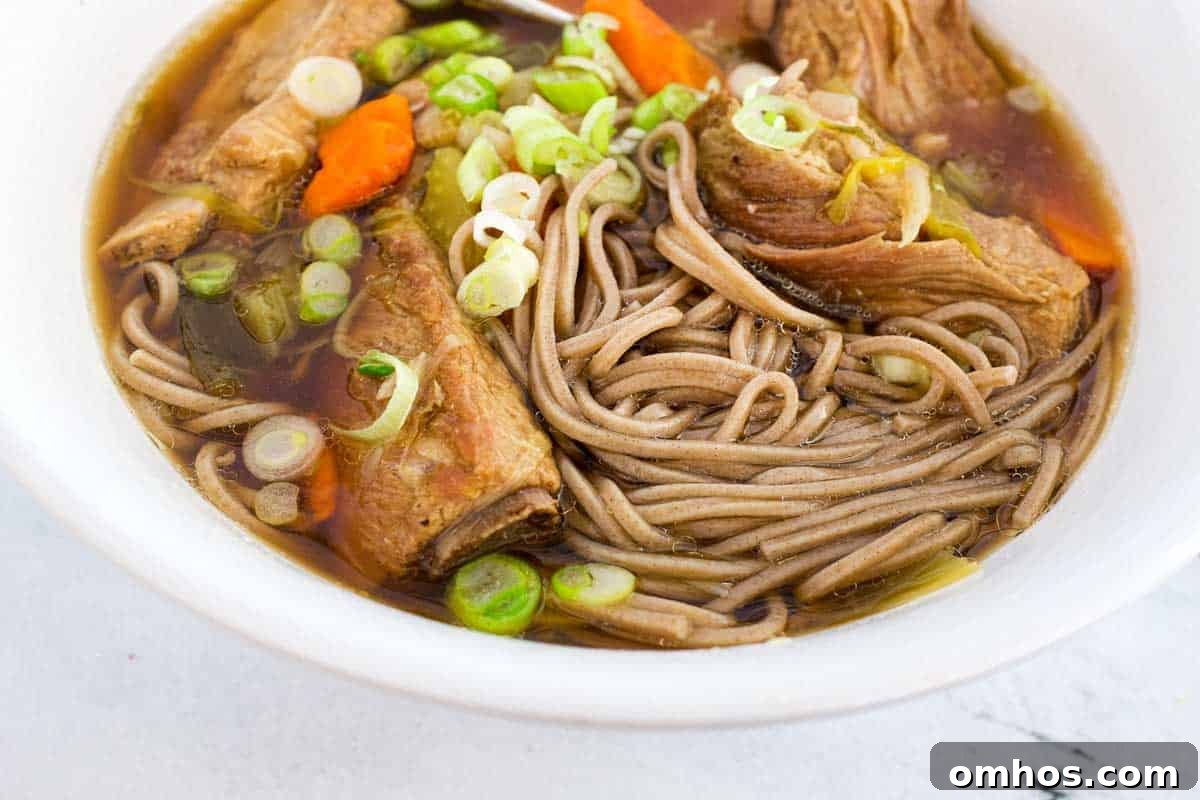
- Assemble — ladle hot broth over the noodles with a few ribs, scatter sliced scallions and serve immediately.
Pro Tips to make your life easier
- Pre-cook noodles and store in the fridge for up to a couple of days. If soba sticks together, a drizzle of oil or pouring hot broth over them will help separate the strands.
- The soup (without noodles) keeps well: refrigerate for 3–4 days or freeze for several months. Reheat until steaming and pour over freshly cooked noodles.
- Always cook noodles separately; cooking them in the broth releases starch and can cloud the soup and alter the texture.
Serving and storing suggestions
This is a one-pot, complete meal. If you want to add heat, serve with chilli flakes or finely sliced fresh chillies, or stir through a small spoonful of chilli-garlic paste.
- Add vegetables — chunky turnip or waxy potatoes added 30 minutes before the end make the soup more substantial.
- Try other meats — beef short ribs, oxtail or bone-in beef cuts can be used instead of pork.
- Swap noodles — egg noodles, rice noodles, glass noodles, ramen or udon are all suitable alternatives.
- Garnishes — fresh cilantro or mint, sliced spring onion, very thin red onion or sliced radishes brighten the bowl.
Ready to get cooking?
This versatile recipe makes the most of humble pork ribs. Slow cooking extracts maximum flavour from the bones and meat, producing a comforting, flavourful soup. Enjoy the process and savor the results.
Any Questions? (FAQ)
Are pork ribs good for bone broth?
Yes — pork bones create excellent flavour in broth and provide tender meat. They produce a rich, savory stock suitable for many soups.
How do you blanch pork ribs for soup?
Bring a large pan of water to a rolling boil, add the ribs and boil for 2–3 minutes. Drain, rinse the ribs and the pan, then proceed with the full recipe. This produces a clearer, cleaner-tasting broth.
Why is pork broth not more common?
Pork broth is popular in many cuisines — from tonkotsu ramen to Chinese spare rib soups — and is returning to mainstream use as cooks rediscover its depth and versatility.
More soup recipes
- Chicken Soup with Fregola
- Mexican Chochoyotes with Chicken Soup
- Greek Lemon Orzo Soup with Chicken
- French Onion Soup
- Chinese Oxtail Noodle Soup
- Korean Samgyetang (Ginseng Chicken Soup)
- Pozole Blanco, Pozole Verde, Pozole Rojo
More Korean recipes
- Kimchi Pork Stew
- Bibim Guksu (Korean Spicy Cold Noodles)
- Salmon Soba Noodles with Miso Dressing
- Korean Gochujang Noodles with Pork
- Gochujang Chicken
- Korean Braised Tofu – Dubu-Jorim
- Kimchi Fried Rice (볶음밥)
Pork Rib Soup with Noodles
Recipe by: Lee
Course: Appetizer, Main Course
Cuisine: Chinese, Japanese
Prep Time: 10 minutes
Cook Time: 2 hours 30 minutes
Total Time: 2 hours 40 minutes
Servings: 4
Calories (per serving): 1070 kcal
Ingredients
- 2.2 lb (1 kg) pork spare ribs
- 2 tbsp vegetable oil
- 5 scallions (spring onions), cut into batons
- 2 sticks celery, thickly sliced
- 4 slices ginger
- 3 garlic cloves, chopped
- 2 carrots, thickly sliced
- ¼ cup dark soy sauce
- 2 tbsp light soy sauce
- ¼ tsp black peppercorns
- 3 star anise
- 2 tbsp rice vinegar
- 1½ tsp salt (adjust to taste)
- 14 oz (400 g) soba noodles (about 100 g per person)
- 2 scallions, thinly sliced for garnish
Instructions
- In a large dutch oven or deep pan, heat the oil until hot and fry the spare ribs for 2–3 minutes per side until browned. Remove and set aside.
- Clean the pan and add about 1 litre of water. Bring to a boil and add the ribs. Boil for 3–4 minutes to draw out impurities, then drain and rinse the ribs.
- Wipe the pan clean and add another 2 litres of water. Return the ribs and add the scallions, celery, ginger, garlic, carrot, dark and light soy sauces, peppercorns, star anise and rice vinegar.
- Bring to a simmer, reduce to very low heat and cook, covered, for 2½ hours, barely simmering. Season with salt to taste. Remove the ginger and star anise before serving.
- Cook soba noodles in a separate large pot according to package directions (around 7 minutes), drain and divide among bowls.
- Ladle hot broth and vegetables over the noodles, add a few ribs, top with sliced scallions and serve immediately.
Notes
Substitutes and tips
- Beef short ribs are a tasty alternative; cook the same way.
- If you prefer, swap soba for glass noodles, rice noodles, or egg noodles.
- To make a heartier soup without noodles, add chunky potatoes or turnips about 30 minutes before the end of cooking.
- Browning the ribs is important for both flavour and colour — don’t skip it.
Storing and preserving
- The soup keeps best without noodles. Refrigerate the broth for 3–4 days or freeze for several months. Reheat until piping hot and pour over freshly cooked noodles.
- Once noodles are combined with the soup, it is best eaten right away as texture and appearance change on storage.
Nutrition (per serving)
Calories: 1070 kcal | Carbohydrates: 82 g | Protein: 56 g | Fat: 59 g | Saturated Fat: 19 g | Sodium: 3214 mg